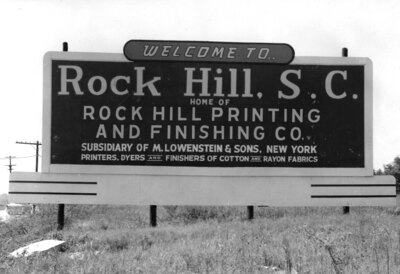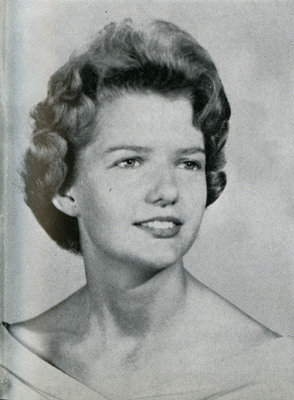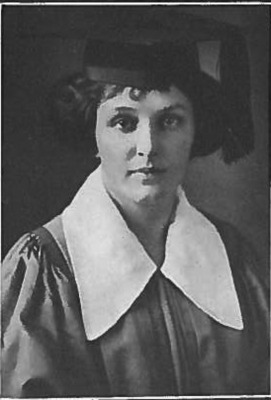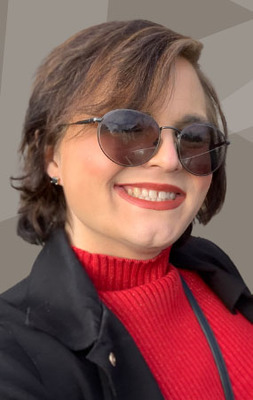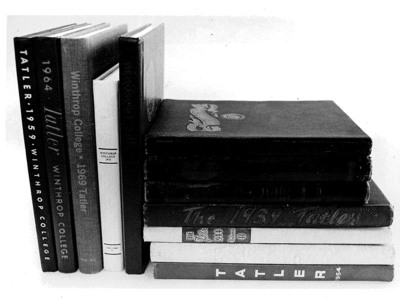

The Oral History Program's mission is to record unique life histories, documenting historical events and memories of our time by preserving and adding these voices to the historical record. The Pettus Archives have been collecting and preserving stories, personal accounts, and recollections through recorded interviews as part of the Oral History Program since 1973. The Archives holds more than 800 interviews in audio, video and text formats, on a wide variety of subjects, including life at Winthrop, Rock Hill, SC and the Catawba Region and people, mill life and workers, American Wars and conflicts, Veteran History Project, women in politics and society, African American, and many other topics.
Disclaimer: The content of oral history interviews are personal and interpretive in nature, relying on memories, experiences, perceptions, and opinions of the interviewee. They do not represent the policy, views, or official history of Winthrop University and the University makes no assertions about the veracity of statements made by individuals participating in the Oral History Program.
-
Interview with Kennedy Lawrence - OH 745
Kennedy Lawrence, Winthrop University, and COVID-19 Pandemic
OH 745
This interview was conducted by William Calandro with Kennedy Lawrence as part of Project 2020: A Collaborative Oral History. Lawrence discusses her experiences amid the novel COVID-19 pandemic and critical year 2020. She details the educational and social challenges she personally faced during a flaring pandemic, notably as a freshman college student. She also provides insight into the state of theatre and performing arts amid the pandemic, particularly the virtualization of theatre. Other notable topics of conversation include virtual learning, vaccination, civil unrest, social activism, and the 2020 political climate.
Kennedy Lawerence ’23 is a native of Columbia, SC who studied Theatre and African American studies at Winthrop University. She earned her B.A. degree in May 2023.
Spearheaded by Dr. O. Jennifer Dixon-McKnight, an Assistant Professor of History & African American Studies, Project 2020 is best summarized in her words: “The goal was to conduct interviews that explored the various ways in which Americans were experiencing and being impacted by the various watershed moments that emerged during 2020 (the global pandemic, social unrest, financial challenges, issues with healthcare, etc.)."
-
Interview with Kenneth Williams, Jr. - OH 773
Kenneth Williams, Winthrop University, and COVID-19 Pandemic
OH 773
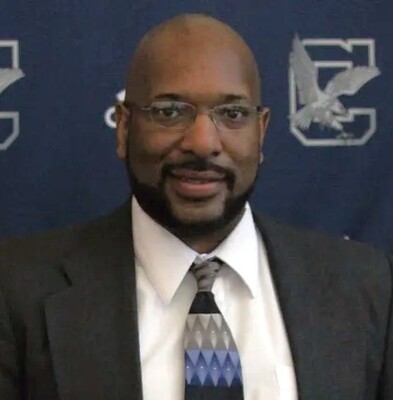
This interview was conducted by William “Bill” Calandro with Kenneth Williams, Jr. as part of Project 2020: A Collaborative Oral History. Williams shares his experiences amid the COVID-19 pandemic and critical year 2020, particularly as a student and collegiate athlete. He first details his move from Allen University to Winthrop University as a track and field athlete—all the while adjusting to virtual learning. Notable topics of conversation include COVID-19 protocols, social isolation, vaccination, higher education, track and field, social unrest (Black Lives Matter), and the political climate of 2020. Williams concludes by sharing his thoughts on the slow return to normalcy after nearly three years since the pandemic’s outbreak.
Kenneth Williams, Jr. (b. 2002) is a native of Miami, Florida who, at the time of the interview, studied Business with a concentration in Marketing at Winthrop University in Rock Hill, SC. He previously studied at Allen University in Columbia, SC. Williams competed on the track and field team at both colleges.
Spearheaded by Dr. O. Jennifer Dixon-McKnight, an Assistant Professor of History & African American Studies at Winthrop University, Project 2020 is best summarized in her words: “The goal was to conduct interviews that explored the various ways in which Americans were experiencing and being impacted by the various watershed moments that emerged during 2020 (the global pandemic, social unrest, financial challenges, issues with healthcare, etc.).”
-

Interview with Lois Kevan - OH 378
Lois Kevan
OH 378
IN PROCESSING
Interviews with extension members and agents throughout the country documenting the history and development of the extension movement in the U.S. The interviews describe homemaking, child bearing and family management in the small towns and rural areas where they live. They also discuss the role of extension homemakers groups in their lives.
-

Interview with Primavat Khutrakul - OH 264
Primavat Khutrakul
OH 264
This interview discusses the experiences and studies of Primavat Khutrakul who was a foreign exchange student from Bangkok, Thailand and studied in the United States. Primavat Khutrakul attended Winthrop College in order to get a Masters in Food and Nutrition in the Fall of 1980. Before attending Winthrop College, Primavat Khutrakul attended George Washington University and a university in Bangkok, Thailand. During the interview, Primavat Khutrakul compares American universities with universities in Thailand, comparing their degree programs, their cost, and their cost. Primavat Khutrakul also talks a lot about Thailand, including their customs, religions, climate, economy, health care, government, and sports.
-
Interview with Kierra Byrd - OH 719
Kierra Byrd, Black Women, and Social Justice
OH 719
This interview was conducted by Winthrop student Makayla Strozier with Kierra Byrd as part of HIST/AAMS/WMST-517: Black Women in America and Project 2020: A Collaborative Oral History on the Coronavirus Global Pandemic. Byrd discusses the experiences of Black women during the social justice movements of 2020, including their roles in racial justice efforts and the Black Lives Matter movement. She reflects on the contributions of Black women to the African American community and discusses the ways misogyny and gender inequality can affect their recognition and treatment.
Byrd discusses the influence of social media on conversations about race and gender and her perception that Black women receive less public recognition than Black men in discussions of racial injustice and police brutality. She also addresses the stereotype of Black women as strong and discusses the pressures associated with expecting Black women to provide support for others while their own experiences and vulnerabilities receive less attention. Byrd emphasizes the importance of recognizing Black women as individuals with their own needs, experiences, and perspectives.
Kierra Byrd (b. 2000) is a native of West Columbia, South Carolina, and a graphic design student at Winthrop University with a minor in web design.
-
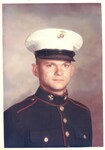
Interview with John Charles "Bullit" Killian - VHP 112
John Charles Killian and Vietnam War
VHP 112
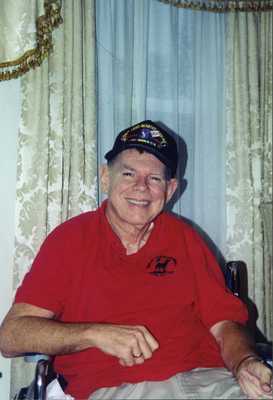
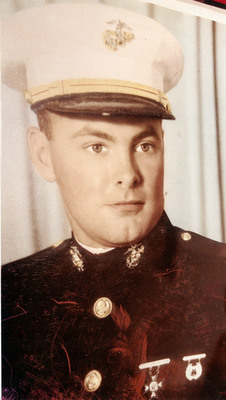
On October 19, 2021, John Charles “Bullit” Killian (b. 1941), a veteran of the United States Marine Corp, sat down with interviewers Brian Garner who is an employee for The Chester Newspaper and a volunteer with The Disabled American Veterans, Roxann James, to talk about Killian’s past experiences in the Marine Corp. Bullit started off at the beginning at the induction center after being drafted where he was with 5 former classmates of Chester High School. How he became a Marine volunteer with the help of his best friend. Then on to basic training in Parris Island, SC and was then sent to Camp Lejeune, NC for Infantry and electrician training. From there he went to Marine Corp Air Station Cherry Point. Bullit served in Vietnam from 1967-1968 at Phu Bai Combat Base. He received a Vietnam Service Medal, Vietnam Campaign Medal, National Defense Service Medal, and a Combat Action Ribbon for his service.
-
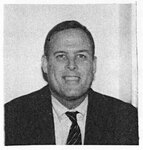
Interview with Manning Kimmel - OH 221
Manning Marius Kimmel
OH 221
In his March 10, 2015 interview with Rebecca Masters, Manning Kimmel reflects on the DiGiorgio Administration. Kimmel recounts DiGiorgio’s efforts to grow Winthrop and create a bridge between the University and Rock Hill. Throughout the interview, Kimmel summarizes the general consensus of the Rock Hill community in recent key events at Winthrop. This interview was conducted for inclusion into the Louise Pettus Archives and Special Collections Oral History Program.
-
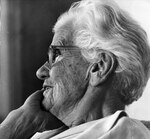
Interview with Lee Wicker Kinard - OH 784
Leila Wicker Kinard
OH 784
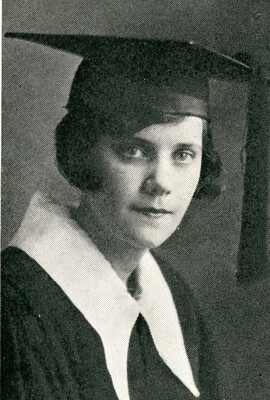
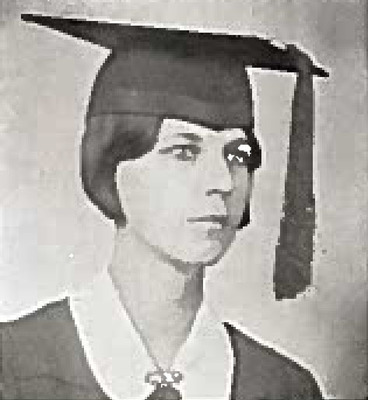
This interview was conducted by Roy Flynn with Leila Wicker "Lee" Kinard (1871–1963), a former Winthrop history professor and the wife of Dr. James Pinckney Kinard, Winthrop College's second president. Mrs. Kinard joined the Winthrop faculty in 1895, where she taught history after serving as an assistant in the Department of History and English. She married Dr. James Pinckney Kinard on June 29, 1899. Following the death of founding president Dr. David Bancroft Johnson in 1928, Dr. Kinard became president of Winthrop College, serving until 1934.
In this interview, Mrs. Kinard reflects on the founding ideals of Winthrop College and the legacy of Dr. David Bancroft Johnson. She argues that Johnson's enduring influence stemmed not from his personality but from his progressive vision that women should receive a rigorous academic education to prepare them for meaningful roles as citizens rather than solely as wives and mothers. She discusses Johnson's efforts to emphasize liberal arts education over purely industrial or vocational training, his relationship with her husband, and the intellectual climate that shaped the early years of the college. Mrs. Kinard also offers her perspectives on the purpose of higher education, the education of women, changing social attitudes in the South, and the importance of cultivating independent thought over vocational training alone. Drawing upon her experiences as both a faculty member and the wife of Winthrop's second president, she provides insight into the college's formative years, the character of its early student body, and the educational philosophy that influenced generations of Winthrop graduates.
-
Interview with Marge Kleinjan and Carla Kleinjan - OH 511
Marge Kleinjan and Carla Kleinjan
OH 511
IN PROCESSING
Interviews with extension members and agents throughout the country documenting the history and development of the extension movement in the U.S. The interviews describe homemaking, child bearing and family management in the small towns and rural areas where they live. They also discuss the role of extension homemakers groups in their lives.
-
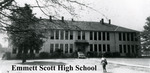
Interview with Carl J. Knighton - OH 673
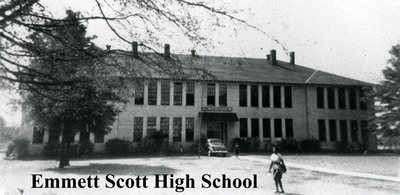
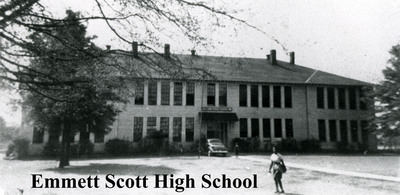
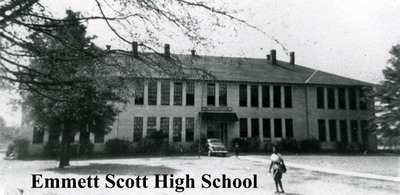
Carl J. Knighton and Emmett Scott High School
OH 672
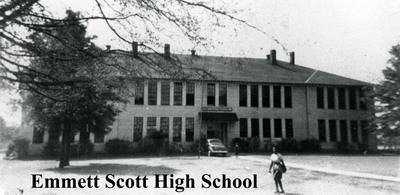
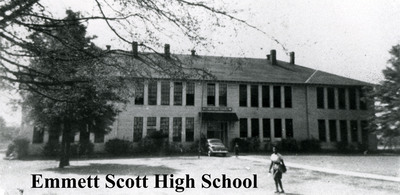
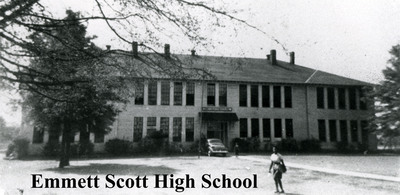
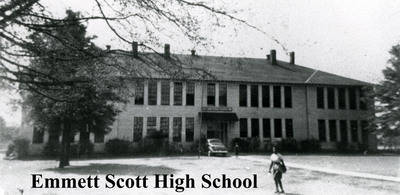
This interview was conducted by Dr. George Garrison with Carl J. Knighton for Dr. Garrison’s project on the History of Emmett Scott High School. Emmett Scott was the segregated high school for African-Americans, which was named after Emmett Scott, a former aide to Booker T. Washington and President Woodrow Wilson. The school opened in 1920 and closed in 1970 when full integration was implemented in Rock Hill South Carolina schools. Mr. Knighton attended Emmett Scott from first grade until eleventh grade. In this interview Mr. Knighton discusses his time and recollections of Emmett Scott High School as well as his military service and his experiences and recollections of the local black community of Rock Hill, South Carolina.
-
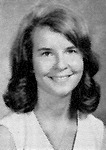
Interview with Virginia Koch - OH 256
Virginia Koch
OH 256
This interview was conducted by Michelle Dubert-Bellrichard with Virginia Koch on January 13, 2015, for the Louise Pettus Archives and Special Collections Oral History Program. Koch graduated from Winthrop College in 1974 with a bachelor’s degree in Elementary Education. She later earned a master’s degree in Adult and Continuing Education.
Koch discusses her decision to attend Winthrop, influenced in part by her older sister, a Winthrop alumna, and her mother, an elementary school teacher who helped establish a kindergarten program in Columbia, South Carolina. She describes adjusting to college life and living on campus, including her experiences with roommates, dormitory rules and regulations, dress codes, social activities, and the “Rat Week” traditions for freshmen. She also recalls changes in visitation policies that eventually allowed male students to visit women’s dormitory rooms.
Koch discusses her experiences as an Elementary Education major, including her coursework, interest in psychology, and student-teaching experience in a fourth-grade classroom in Hartsville, South Carolina. She describes the influence of her supervising teacher and how that experience shaped her approach to teaching. She also recalls campus activities and traditions, including Junior Follies, musical performances, concerts, and guest speakers such as feminist activist Gloria Steinem.
A significant portion of the interview focuses on the social and cultural changes taking place at Winthrop and in American society during the 1970s. Koch discusses the admission of male students and Winthrop’s transition to coeducation during her senior year. She reflects on changing attitudes toward women’s education and careers, the influence of the women’s movement, and the increasing diversity of the student body. She also discusses her experiences developing a friendship with an African American student and reflects on the racial attitudes and social changes she encountered during her college years.
Koch describes her career following graduation, including teaching fourth grade in Sumter, South Carolina, and her subsequent move to Wisconsin. She discusses earning her master’s degree and working in adult and continuing education, education administration, organizational development, and training. Her career included positions at Midlands Technical College, North Central College, Mercy Hospital in Chicago, United Airlines, the Joint Commission on Accreditation of Healthcare Organizations, and the Peace Corps. She discusses her work as Director of Recruiting for the Peace Corps in Chicago and later as Deputy Director of Nationwide Testing for the federal government, from which she retired in 2014.
Throughout the interview, Koch reflects on how her experiences at Winthrop helped shape her confidence, education, career, and outlook on social and cultural change. She also discusses returning to the Winthrop campus for an alumni reunion in 2014 after approximately forty years away and reflects on the changes she observed at the university.
-
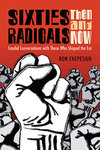
Interview with Paul Krassner - OH 238
Paul Krassner
OH 238
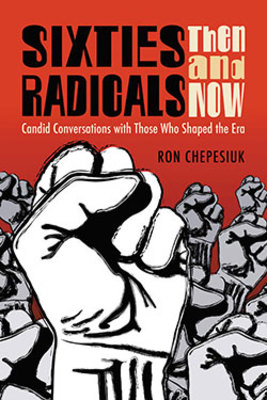
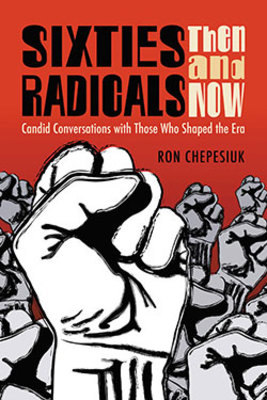
In his July 1992 interview with Ron Chepesiuk, Paul Krassner described his time as an anti-war activist during the 1960s and his current work. Krassner covered topics of satire, drugs, other activists, the Chicago Conspiracy Trial, the FBI and its involvement, Groucho Marx, and other conspiracies. He also detailed events like the levitating of the Pentagon and America’s Youth March on the Democratic Convention. Krassner, known as being the father of the Underground Press, was then continuing his satirical writing, critiquing the world. This interview was conducted for inclusion into the Louise Pettus Archives and Special Collections Oral History Program.
-
Interview with Pearl Laffite - OH 476
Pearl Laffite
OH 476
IN PROCESSING
Interviews with extension members and agents throughout the country documenting the history and development of the extension movement in the U.S. The interviews describe homemaking, child bearing and family management in the small towns and rural areas where they live. They also discuss the role of extension homemakers groups in their lives.
-
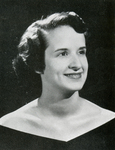
Interview with Mary Anne DuBose Douglas Lake - OH 615
Mary Anne DuBose Douglas Lake
OH 615
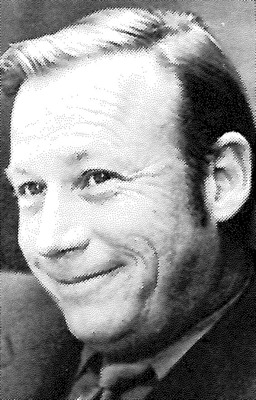
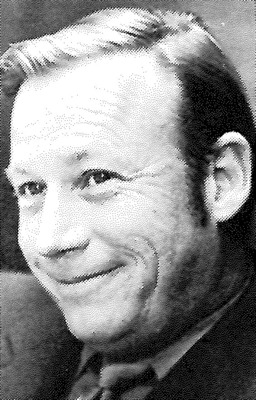
This interview was conducted for the as part of the Winthrop History Project spearheaded by Winthrop President Emeritus Dr. Anthony DiGiorgio and Rebecca Masters to “document the 24-year path of the original Winthrop College to becoming Winthrop University.” This effort was to produce a history of the institution and Dr. DiGiorgio’s tenure as president as a supplement to Dr. Ross Webb’s history of Winthrop (The Torch is Passed) that covered Winthrop history up to Dr. DiGiorgio becoming president. A key aspect of the project was a series of audio-taped interviews conducted with various members of the extended Winthrop community who participated in or helped guide the advancement of Winthrop over these years. That way, the Winthrop story will be told in an array of participants’ own words, own voices and from their own perspectives.
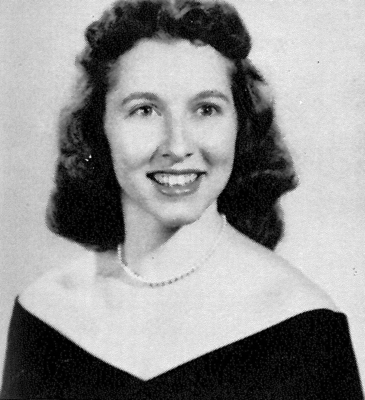
This interview is with Mary Anne DuBose Douglas Lake. Mary was a 1955 graduate of Winthrop with a degree in music. Her mother was also a Winthrop graduate from about 1928. Mary served on the Winthrop Alumni Board and then the Winthrop Board of Trustees from 1988 through 2000. In this interview she discusses her experiences and impressions working with Winthrop President, Dr. Anthony DiGiorgio.
-
Interview with Cecilia Lamb - OH 376
Cecilia Lamb
OH 376
IN PROCESSING
Interviews with extension members and agents throughout the country documenting the history and development of the extension movement in the U.S. The interviews describe homemaking, child bearing and family management in the small towns and rural areas where they live. They also discuss the role of extension homemakers groups in their lives.
-
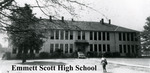
Interview with George C. Land and Samuel Foster - OH 694
George C. Land, Samuel Rufus Foster Sr., and Emmett Scott High School
OH 694
This interview was conducted by Dr. George Garrison with George C. Land and Samuel Foster for his History of Emmett Scott High School project. Both Mr. Land and Mr. Foster are former principals of the school. Emmett Scott High School was the segregated high school for African-Americans, which was named after Emmett Scott, a former aide to Booker T. Washington and President Woodrow Wilson. The school opened in 1920 and was closed in 1970 when full integration was implemented in Rock Hill South Carolina schools. Mr. George land was principal from 1967-1968. Mr. Samuel Foster was principal from 1968-1970 when the school closed. Both Mr. Land and Mr. Foster discuss their experiences before and after serving as principal of Emmett Scott as well as the in the local community. Mr. Foster discusses some of his time with the South Carolina State General Assembly.
-
Interview with Gayle and Joe Lanford - OH 254
Gayle Campbell Lanford and Joe Lanford
OH 254
This interview was conducted for the as part of the Winthrop History Project spearheaded by Winthrop President Emeritus Dr. Anthony DiGiorgio and Rebecca Masters to “document the 24-year path of the original Winthrop College to becoming Winthrop University.” This effort was to produce a history of the institution and Dr. DiGiorgio’s tenure as president as a supplement to Dr. Ross Webb’s history of Winthrop (The Torch is Passed) that covered Winthrop history up to Dr. DiGiorgio becoming president. A key aspect of the project was a series of audio-taped interviews conducted with various members of the extended Winthrop community who participated in or helped guide the advancement of Winthrop over these years. That way, the Winthrop story will be told in an array of participants’ own words, own voices and from their own perspectives.
This interview is with Gayle and Joe Lanford. Gayle Campbell Lanford (1940-2017) attended Winthrop from 1958 through 1961 and graduated in 1962 with a degree in English and a minor in French. She returned to Winthrop and received a Master’s degree in Guidance and Counseling in 1972. Joe Lanford was the City Planner of Rock Hill, SC and City Manager for a large portion of President DiGiorgio’s tenure. In this interview Gayle discusses her experiences attending Winthrop and Joe discusses is experiences and impressions working with Winthrop President, Dr. Anthony DiGiorgio as Rock Hill Manager.
-
Interview with Celia Lausted - OH 381
Celia Lausted
OH 381
IN PROCESSING
Interviews with extension members and agents throughout the country documenting the history and development of the extension movement in the U.S. The interviews describe homemaking, child bearing and family management in the small towns and rural areas where they live. They also discuss the role of extension homemakers groups in their lives.
-
Interview with Agnes Lawton - OH 100
Agnes Lawton
OH 100
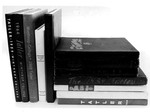
In her November 13, 1980 interview with Lewis P. Armistead, Agnes Lawton relays her family history and career as a teacher. This interview was conducted for inclusion into the Louise Pettus Archives and Special Collections Oral History Program.
-
Interview with Tim Leary - OH 239
Timothy Leary
OH 239
IN PROCESSING
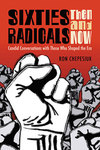
This interview is about his 1960s experiences including his appointment to the Harvard University Faculty in 1960 and his experimentation with psychedelic drugs.
-
Interview with William Ledford - OH 103
William Ledford
OH 103
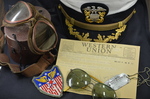
In his November 30, 1980 interview with his daughter Anne Ledford, William Ledford remembers his service in the Army during WWII. In particular, Ledford details his basic training and journey through Iceland, England, and France. Ledford shares his recollection of the Battle of the Bulge and the aftermath of WWII. This interview was conducted for inclusion into the Louise Pettus Archives and Special Collections Oral History Program.
-
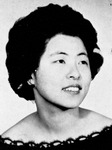
Interview with Jai Lee - OH 286
Jai Eun Kim Lee
OH 286
In her January 14, 2014 interview with Cody Willis, Jai Eun Kim Lee (Class of 1963) shares her experience as an economic major from Korea. Lee discusses the differences between Korean colleges and Winthrop.
-
Interview with Verna Lefman - OH 391
Verna Lefman
OH 391
IN PROCESSING
Interviews with extension members and agents throughout the country documenting the history and development of the extension movement in the U.S. The interviews describe homemaking, child bearing and family management in the small towns and rural areas where they live. They also discuss the role of extension homemakers groups in their lives.
-
Interview with Hazel Leininger - OH 516
Hazel Leininger
OH 516
IN PROCESSING
Interviews with extension members and agents throughout the country documenting the history and development of the extension movement in the U.S. The interviews describe homemaking, child bearing and family management in the small towns and rural areas where they live. They also discuss the role of extension homemakers groups in their lives.