


The Oral History Program's mission is to record unique life histories, documenting historical events and memories of our time by preserving and adding these voices to the historical record. The Pettus Archives have been collecting and preserving stories, personal accounts, and recollections through recorded interviews as part of the Oral History Program since 1973. The Archives holds more than 800 interviews in audio, video and text formats, on a wide variety of subjects, including life at Winthrop, Rock Hill, SC and the Catawba Region and people, mill life and workers, American Wars and conflicts, Veteran History Project, women in politics and society, African American, and many other topics.
Disclaimer: The content of oral history interviews are personal and interpretive in nature, relying on memories, experiences, perceptions, and opinions of the interviewee. They do not represent the policy, views, or official history of Winthrop University and the University makes no assertions about the veracity of statements made by individuals participating in the Oral History Program.








-
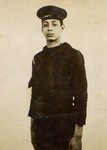
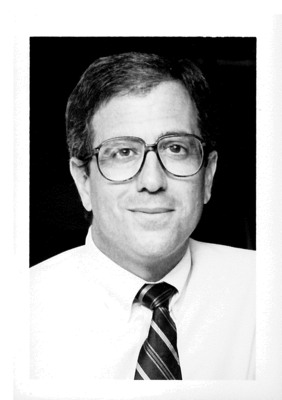
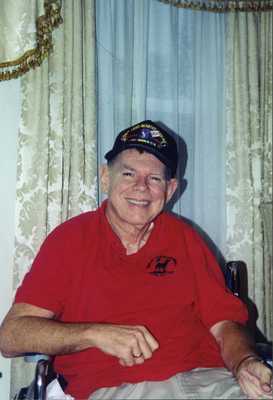
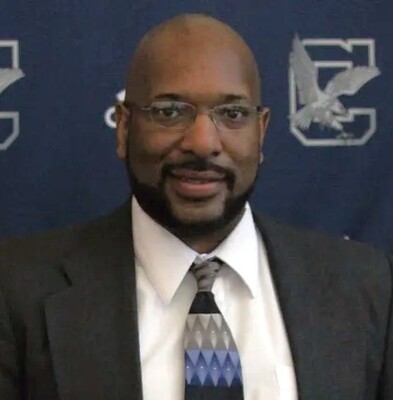
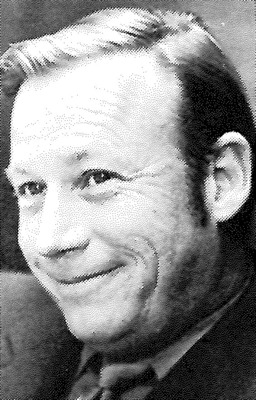
Interview with Victor C. Hemphill - VHP 018
Victor C. Hemphill
VHP 018
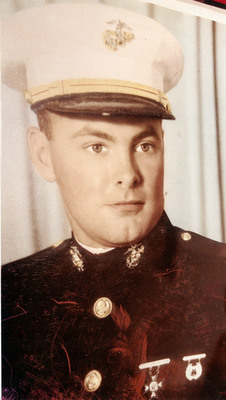
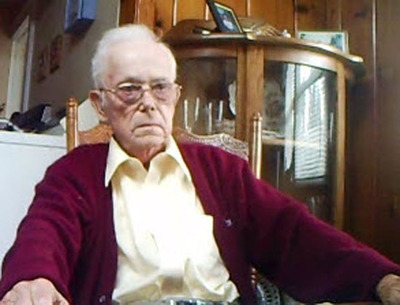
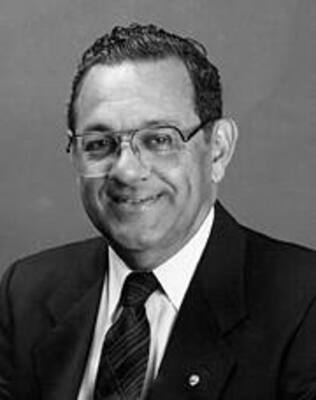
In his October 20, 2003 interview with Shamona McClary, Victor Hemphill shares his experiences in the South Pacific during WWII and his life after service. This interview was conducted for inclusion into the Louise Pettus Archives and Special Collections Oral History Program.
-
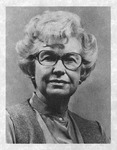
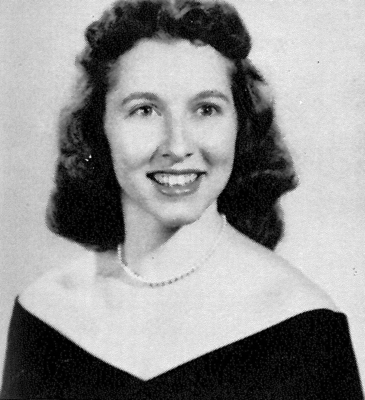
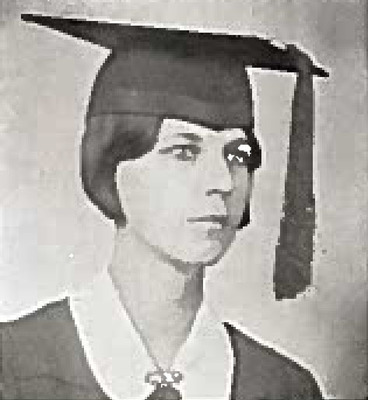
Interview with Lillie Edens Herndon - OH 163
Lillie Edens Herndon
OH 163
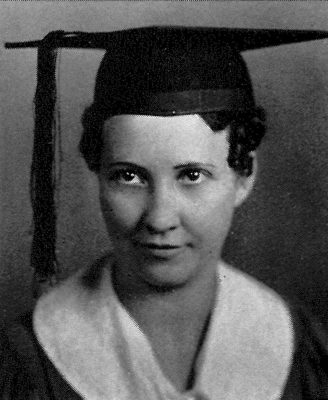
Lillie Edens Herndon (1916-2009) was the former president of the South Carolina Congress of Parents and Teachers (1962-1965), the National Congress of Parents and Teachers (1973-1975), and former member of the Board of Directors of the Corporation for Public Broadcasting. Topics of the interview include her early childhood, education, work experiences, family life, and public service activities, such as her involvement with the PTA, South Carolina Board of Education, National Action for Foster Children, and the Board of Directors of the Corporation for Public Broadcasting and Draughn’s Business College.
-

Interview with Pearl Herndon - OH 497
Pearl Herndon
OH 497
IN PROCESSING
Interviews with extension members and agents throughout the country documenting the history and development of the extension movement in the U.S. The interviews describe homemaking, child bearing and family management in the small towns and rural areas where they live. They also discuss the role of extension homemakers groups in their lives.
-
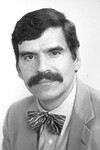
Interview with Mark Y. Herring - OH 257
Mark Y. Herring
OH 257
In this episode of WFAE 90.7 FM’s Charlotte Talks, host Mike Collins interviews Dr. Mark Y. Herring, Dean of Library Services at Winthrop University, and Bill Nelson, Director of Libraries at Augusta State University, about the changing role of academic libraries amid the growing use of the internet in higher education. The discussion examines the challenges of evaluating the authority and accuracy of information found online, including students’ tendency to prioritize the speed and convenience of accessing information over thorough research and verification. Herring and Nelson discuss the increasing incidence of plagiarism, the importance of corroborating sources, and the value of subscription databases that provide access to scholarly and verified materials. They also address the limited amount of library material available online, the costs and challenges of digitization and electronic resource subscriptions, the preservation and accessibility of digital materials, and the continuing importance of print collections. Herring emphasizes the role of libraries and librarians in teaching students research skills and traditional scholarly practices, while both guests consider how print resources and emerging technologies can be integrated to support academic research. The conversation ultimately explores how academic libraries can adapt to technological change while maintaining their roles as centers for scholarship, research, and access to reliable information.
-
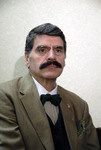
Interview with Mark Y. Herring - OH 608
Mark Y. Herring
OH 608
This interview was conducted for the as part of the Winthrop History Project spearheaded by Winthrop President Emeritus Dr. Anthony DiGiorgio and Rebecca Masters to “document the 24-year path of the original Winthrop College to becoming Winthrop University.” This effort was to produce a history of the institution and Dr. DiGiorgio’s tenure as president as a supplement to Dr. Ross Webb’s history of Winthrop (The Torch is Passed) that covered Winthrop history up to Dr. DiGiorgio becoming president. A key aspect of the project was a series of audio-taped interviews conducted with various members of the extended Winthrop community who participated in or helped guide the advancement of Winthrop over these years. That way, the Winthrop story will be told in an array of participants’ own words, own voices and from their own perspectives.
This interview is with Dr. Mark Y. Herring. Dr. Herring was the Dean of the Library from 1999-2020. In this interview discusses his experiences working for Winthrop as well as his experiences and impressions working with Winthrop President, Dr. Anthony DiGiorgio.
-
Interview with Lura Hess - OH 372
Lura Hess
OH 372
IN PROCESSING
Interviews with extension members and agents throughout the country documenting the history and development of the extension movement in the U.S. The interviews describe homemaking, child bearing and family management in the small towns and rural areas where they live. They also discuss the role of extension homemakers groups in their lives.
-
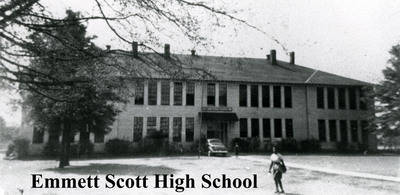
Interview with George Hicklin - OH 702
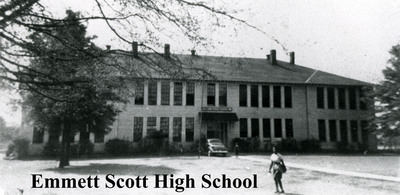
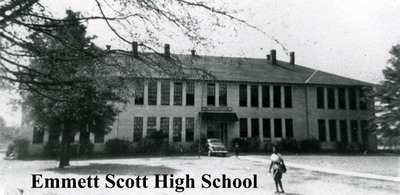
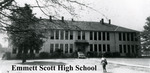
George Hicklin and Emmett Scott High School
OH 702
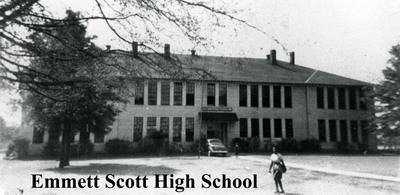
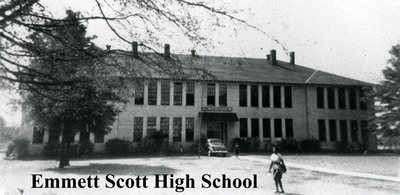
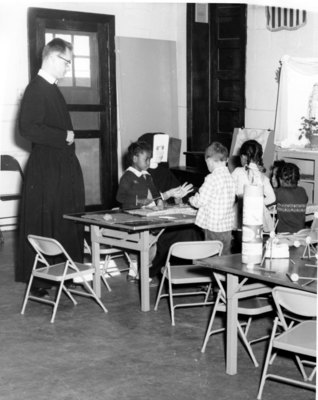
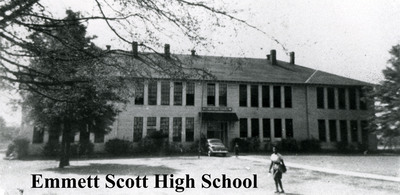
This interview was conducted by Dr. George Garrison with George Hicklin for his Emmett Scott History Project. Emmett Scott was the segregated high school for African Americans that was named after Emmett Scott a former aide to Booker T. Washington and President Woodrow Wilson. Emmett Scott High School opened in 1920 and closed in 1970 with full integration of the Rock Hill School District. Mr. Hicklin attended Emmett Scott from 1951-1955. In this interview Mr. Hicklin discusses his experiences at Emmett Scott and the impact it had on the black community. He also details his experience in the military shortly after graduating high school. Mr. Hicklin details his military career and how he feels that Emmett Scott prepared him for success in life. Mr. Hicklin joined the Navy during the Vietnam war rising in rank to Chief Petty Officer.
-
Interview with Thomas Nelson Hickman - OH 171
Thomas Nelson Hickman
OH 171
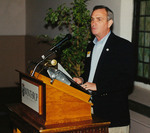
In his February 27, 2015 interview with Jenna Kasmarik, Thomas Hickman shares his experiences complying with Title IX in the athletic department. Hickman lends his perspective on the pros and cons of Title IX and how the athletic department has changed since Title IX became law. This interview was conducted for inclusion into the Louise Pettus Archives and Special Collections Oral History Program.
-
Interview with Thomas Nelson Hickman - OH 609
Thomas Nelson Hickman
OH 609
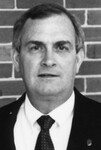
This interview was conducted for the as part of the Winthrop History Project spearheaded by Winthrop President Emeritus Dr. Anthony DiGiorgio and Rebecca Masters to “document the 24-year path of the original Winthrop College to becoming Winthrop University.” This effort was to produce a history of the institution and Dr. DiGiorgio’s tenure as president as a supplement to Dr. Ross Webb’s history of Winthrop (The Torch is Passed) that covered Winthrop history up to Dr. DiGiorgio becoming president. A key aspect of the project was a series of audio-taped interviews conducted with various members of the extended Winthrop community who participated in or helped guide the advancement of Winthrop over these years. That way, the Winthrop story will be told in an array of participants’ own words, own voices and from their own perspectives.
This interview is with Thomas Nelson “Tom” Hickman. Tom came to Winthrop in 1989 as the Associate Athletic Director and served in this role until he became the Athletic Director in 1996. He retired in 2016. In this interview discusses his experiences working for Winthrop as well as his experiences and impressions working with Winthrop President, Dr. Anthony DiGiorgio.
-
Interview with Margaret Hill - OH 455
Margaret Hill
OH 455
IN PROCESSING
Interviews with extension members and agents throughout the country documenting the history and development of the extension movement in the U.S. The interviews describe homemaking, child bearing and family management in the small towns and rural areas where they live. They also discuss the role of extension homemakers groups in their lives.
-
Interview with HIST-602 Class - OH 724
HIST-602, Winthrop University, and COVID-19 Pandemic
OH 724
This interview was conducted by Dr. O. Jennifer Dixon-McKnight, Assistant Professor of History & African American Studies at Winthrop University, with graduate students in her fall 2020 course HIST602/603: History Colloquium I as part of Project 2020: A Collaborative Oral History. Dr. Dixon-McKnight and the seven interviewees reflect on their semester-long journey at the forefront of this oral history project—all eight served as interviewers during the fall of 2020. They discuss in detail their personal experiences amid the COVID-19 pandemic and the critical year of 2020 in general, particularly in terms of educational, professional, and social challenges. Other notable topics include racial tensions, COVID-19 guidelines, and the 2020 U.S. Presidential Election.
The interviewees (Jackson Branch ‘22, Sarah Edwards ‘20, Abby Hieber ‘20, Kenya Lane ‘21, Jessica Rochester ‘21, Stacy Steele ‘21, and Cedric Streater ‘20) are all M.A. History graduates who conducted oral history interviews for Project 2020.
Spearheaded by Dr. Dixon-McKnight, Project 2020 is best summarized in her words: “The goal was to conduct interviews that explored the various ways in which Americans were experiencing and being impacted by the various watershed moments that emerged during 2020 (the global pandemic, social unrest, financial challenges, issues with healthcare, etc.)."
-
Interview with James A. Hodge - OH 211
James A. Hodge
OH 211
In his interview with Michael Cooke, James A Hodge discusses his life and experiences in rural South Carolina. He also details his time with and memories of the Progressive Democratic Party, integration, African American voter registration and various politicians from Mullins, South Carolina. Mr. Hodge discusses the influence he witnessed within the black community especially in regards to the voter registration efforts.
-
Interview with Anita Hoffman - OH 236
Anita Hoffman
OH 236
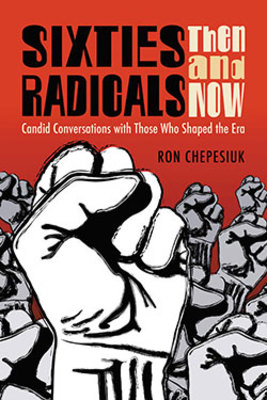
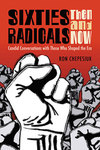
In her November 1992 interview with Ron Chepesiuk, Anita Hoffman detailed her experiences in the 1960s and her time with her ex-husband, Abbie Hoffman. Hoffman, aside from speaking about her ex-husband, covered such topics as poverty, racism, the Weathermen (Weather Underground), the Black Panthers and the Black Power movement, the Student Nonviolent Coordinating Committee, Women’s Liberation, and the Youth International Party. Hoffman also discussed sexism, mental illness, in reference to Abbie and her studies as a Psychology major, the Clarence Thomas and Anita Hill hearings, and the technology revolution. This interview was conducted for inclusion into the Louise Pettus Archives and Special Collections Oral History Program.
-
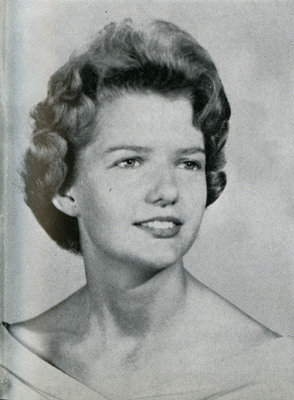
Interview with Betty Morgan Holcombe - OH 794
Betty Morgan Holcombe
OH 794
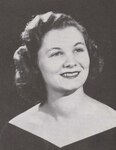
This interview was conducted with Betty Jo Morgan Holcombe, Winthrop College Class of 1956, by Gina Price White, Director of the Louise Pettus Archives and Special Collections at Winthrop University. A native of Clemson, South Carolina, Mrs. Holcombe attended Winthrop from 1952-1956. The Milton W. and Betty Morgan Holcombe Alumni Center was named in her and her husband’s honor and Mrs. Holcombe was awarded the distinguished Mary Mildred Sullivan Award in 2025.
In this interview, Mrs. Holcombe reflects on her time at Winthrop College beginning with why she chose Winthrop; her experiences with students, faculty, and staff; her Dining Room Scholarship; classes; roommates; and other experiences while a student.
-
Interview with John Holder - OH 655
John Holder
OH 655
This interview was conducted for the as part of the 20th Anniversary of the September 11th Terrorist Attacks on the United States. This effort was to produce a history of the university’s, as well as the community’s, response in the days and weeks following the attacks. A key aspect of the project was a series of audio-taped interviews conducted with various members of the Rock Hill and Winthrop communities who felt their stories needed to be shared.
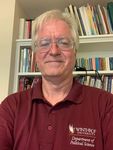
This interview is of Dr. John Holder, Associate Professor of Political Science at Winthrop University. In his interview with Andrew Russell, Professor Joh Holder discusses his memories and experiences during the September 11, 2001 terrorist attack. Professor Holder describes his experience during the attack and the response of the Winthrop and Rock Hill community.
-
Interview with Karen Holt - OH 525
Karen Ona Carnes Holt
OH 525
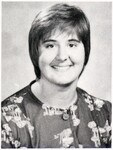
In this March 12 interview, A/V Archivist Emily Deinert speaks with Karen Ona Carnes Holt about her experiences as a student at Winthrop University. Holt, who was born in Fayetteville and raised in Monroe, North Carolina, discusses her decision to attend Winthrop despite the higher out-of-state tuition and describes graduating in December 1976 after three and a half years in order to save her family the cost of an additional semester. She later returned to Winthrop for graduate study in Reading, completing her master’s degree in 1979.
Holt describes her experiences living on campus, including her freshman year in Bancroft Hall, dormitory rules, quiet hours, fire drills, housemothers, hall activities, and the close friendships she developed with other students. She recalls the limited communication available to students before cell phones and email, including dormitory telephones, mailboxes, letters, and care packages. She also discusses the streaking movement that occurred during her freshman year and describes the attention it received on campus, including the involvement of both students and a professor.
A significant portion of the interview focuses on Winthrop’s transition to coeducation during Holt’s freshman year. She recalls the excitement among female students when men were admitted and describes the first group of male students living in the Bancroft Annex. Holt also discusses differences in the accommodations provided to male and female students, particularly the new beds and air conditioning provided to the men while female students continued to use fans. She reflects on how the arrival of male students changed the culture and atmosphere of the campus.
Holt discusses her academic experiences as a Special Education major, including her coursework in education and teaching methods and the professors who influenced her. She explains that her interest in teaching developed from her longstanding appreciation for teachers and education and that her decision to specialize in Special Education was influenced by her experiences caring for two children with intellectual disabilities who lived across the street from her family. She describes feeling well prepared for her teaching career and discusses her graduate studies in Reading at Winthrop, which she began shortly after earning her bachelor’s degree. She also describes financial assistance for graduate tuition provided through Springs Industries while she was teaching in Lancaster.
The interview also addresses Holt’s involvement in the Council for Exceptional Children, her social life and friendships at Winthrop, and the ways students created their own entertainment through campus movies, birthdays, card games, and visits to friends’ homes. She reflects on changes to the Winthrop campus and Rock Hill since her student years and describes her continued connection to the university. Holt concludes by discussing the lasting influence of Winthrop on her life and career, noting that she taught for 34 years and continued to take pride in the education and preparation she received at the university.
-
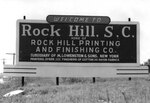
Interview with Earl Honeycutt - OH 541
Earl Honeycutt, Rock Hill Printing and Finishing Company, Bleachery, and Alexander Keith Windham
OH 541
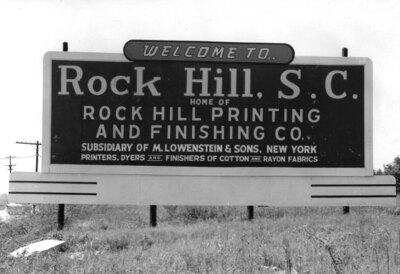
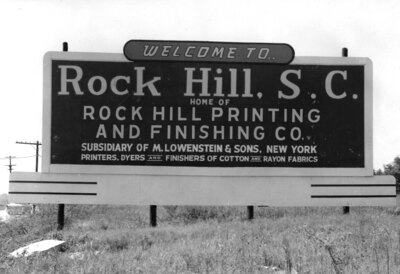
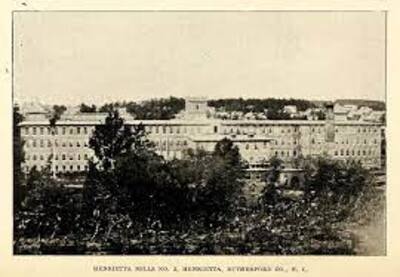
In his May 26, 2017 interview with Alex Windham, Earl Honeycutt detailed his thoughts and memories of his time at the Rock Hill Printing and Finishing Company referred to locals as the Bleachery. Honeycutt spoke of the time period of 1955 through 1977 and on the follow topics: race relations, day to day job responsibilities and actions, union, worker attitudes, the decline of the Bleachery.
-
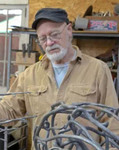
Interview with Dan Howechyn - OH 179
Daniel Andrew Howechyn
OH 179
This interview was conducted with Daniel Andrew Howachyn (1950-2023) for an article to be written on blacksmiths. Mr. Howachyn discusses why he moved south, how he became interested in blacksmithing through first making horseshoes, and the art of blacksmithing. As well as, a little bit about his past before he got into blacksmithing, how he learned blacksmithing, getting inspiration and tips from other blacksmiths through magazines and the North American Blacksmith Association, how certain blacksmith techniques are done, and what he sees as the future of blacksmithing. Many years later he relocated to Black Mountain, NC and founded Black Mountain Iron Works.
-
Interview with Edith Huffman, Agnes Klein, Ethel Watkins and Edna Christian - OH 521
Edith Huffman, Agnes Klein, Ethel Watkins, and Edna Christian
OH 521
IN PROCESSING
Interviews with extension members and agents throughout the country documenting the history and development of the extension movement in the U.S. The interviews describe homemaking, child bearing and family management in the small towns and rural areas where they live. They also discuss the role of extension homemakers groups in their lives.
-
Interview with Ericka Huggins - OH 248
Ericka Huggins
OH 248
In her May 1994 interview with Ron Chepesiuk, Ericka Huggins discussed her part in the 1960s radical movements. Huggins described motivation for joining the BPP and her time as a member, her current work as an AIDS activist, and her work with prison inmates. Huggins covered several topics of the time, including Black Power, Huey Newton, separation movements, FBI involvement, the US Organization, and Charles Hamilton. She also discussed the Thomas-Hill hearings, COINTELPRO and its involvement, the NAACP, the Oakland Community Learning Center, her husband, AIDS and HIV, and her work at the Shanti Project. This interview was conducted for inclusion into the Louise Pettus Archives and Special Collections Oral History Program.
-
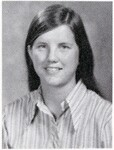
Interview with Mary Beth Hughes - OH 799
Mary Beth Hughes
OH 799
This interview was conducted by Chailyn Young-Haynes with Mary Beth Hughes for the Palmetto Report, a news service produced by students in the Mass Communication Department at Winthrop University. A member of the Class of 1974, Hughes reflects on her experiences as a student during a pivotal period in the university's history, graduating as part of the last class before Winthrop became fully coeducational. She discusses her upbringing in Columbia, South Carolina, her decision to attend Winthrop, and her academic and social experiences on campus. Hughes describes student life in the early 1970s, campus traditions, and the atmosphere surrounding the transition to coeducation, including changing student attitudes and campus culture. She also reflects on the lasting impact of her Winthrop education and the significance of attending university during a period of institutional change.
-
Interview with Gertrude Humphries - OH 453
Gertrude Humphries
OH 453
IN PROCESSING
Interviews with extension members and agents throughout the country documenting the history and development of the extension movement in the U.S. The interviews describe homemaking, child bearing and family management in the small towns and rural areas where they live. They also discuss the role of extension homemakers groups in their lives.
-

Interview with Peggy Hunter - OH 275
Peggy Hunter
OH 275
In her June 2013 interview with Martha Manning, Peggy Hunter detailed her thoughts and memories of her experience here at Winthrop. Hunter spoke of the time period 1968-1971 with an emphasis on the follow topics: Student teaching, Winthrop traditions, and college life from the perspective of a non-traditional college student. Hunter also discussed how Winthrop’s student teaching program had prepared her for a career in teaching. Hunter gives praise as she reminisce and reflect on how Winthrop has grown. This interview was conducted for inclusion into the Louise Pettus Archives and Special Collections Oral History Program.
-
Interview with Rhoda Carter Hunter - OH 222
Rhoda Carter Hunter
OH 222
IN PROCESSING
This interview focuses on Winthrop from 1925-1930. Topics include dorm life, church, the Blue Line, uniforms, D. B. Johnson, the dining hall, swimming, Dr. Kinard, Greek letter clubs, favorite teachers and classes, weekend activities, dating, religion, admission of men and minorities, and Dr. DiGiorgio and changes he brought to Winthrop.
-
Interview with I. Hutchendorf - OH 399
I. Hutchendorf
OH 399
IN PROCESSING
Interviews with extension members and agents throughout the country documenting the history and development of the extension movement in the U.S. The interviews describe homemaking, child bearing and family management in the small towns and rural areas where they live. They also discuss the role of extension homemakers groups in their lives.