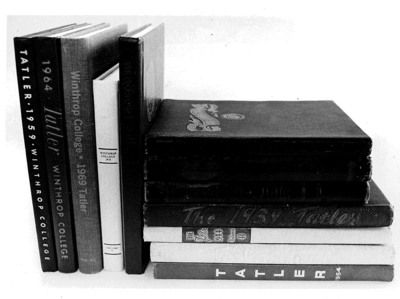

The Oral History Program's mission is to record unique life histories, documenting historical events and memories of our time by preserving and adding these voices to the historical record. The Pettus Archives have been collecting and preserving stories, personal accounts, and recollections through recorded interviews as part of the Oral History Program since 1973. The Archives holds more than 800 interviews in audio, video and text formats, on a wide variety of subjects, including life at Winthrop, Rock Hill, SC and the Catawba Region and people, mill life and workers, American Wars and conflicts, Veteran History Project, women in politics and society, African American, and many other topics.
Disclaimer: The content of oral history interviews are personal and interpretive in nature, relying on memories, experiences, perceptions, and opinions of the interviewee. They do not represent the policy, views, or official history of Winthrop University and the University makes no assertions about the veracity of statements made by individuals participating in the Oral History Program.
-
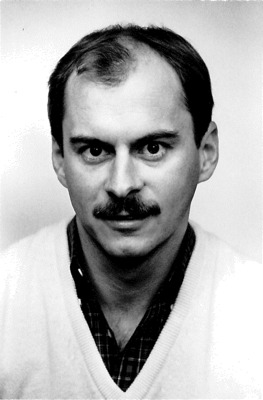
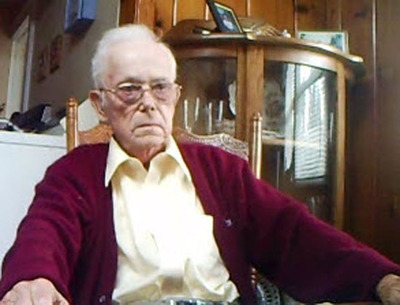
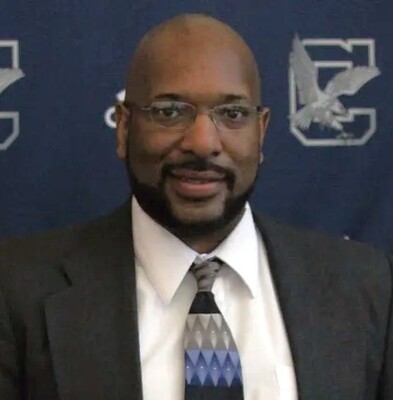
Interview with Rev. Walter Banks White - OH 675
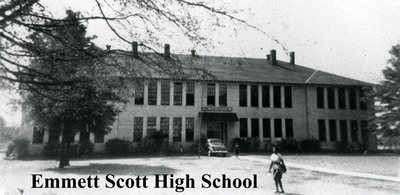
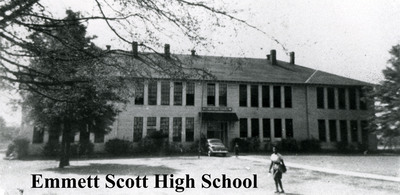
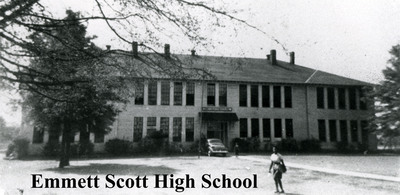
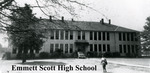
Walter Banks White and Emmett Scott High School
OH 675
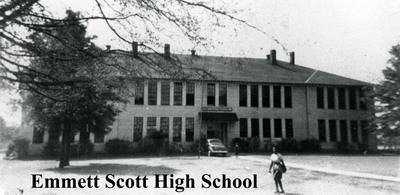
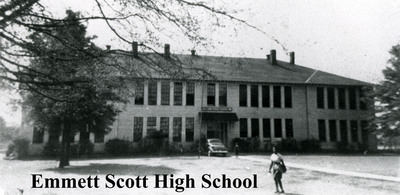
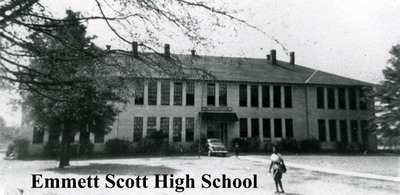
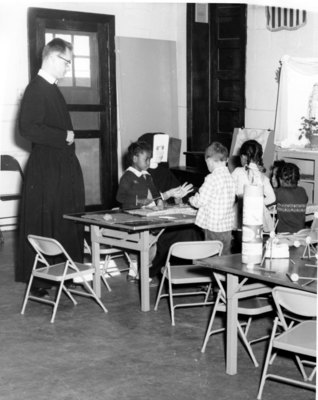
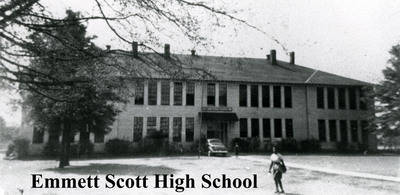
This interview was conducted by Dr. George Garrison with Reverend Walter White as part of the History of Emmett Scott High School project. Emmett Scott was the segregated African American high school named after Emmett Scott a former aid to Booker T. Washington and President Woodrow Wilson. Emmett Scott High School opened in 1920 and was closed in 1970 with the integration of the Rock Hill South Carolina School District. Reverend White attended Emmett Scott in the 1940s and graduated in the class of 1947. He discusses his childhood growing up in Rock Hill in the 1930s and ‘40s and his experience at Emmett Scott as a student. Reverend White also discusses his career in education and ministry and the influence Emmett Scott had in his life and the surrounding community. Reverend White Discusses at length impact of segregation on the education system both before and after integration. He details the struggles faced by minority students as well as the educators even after integration.
-

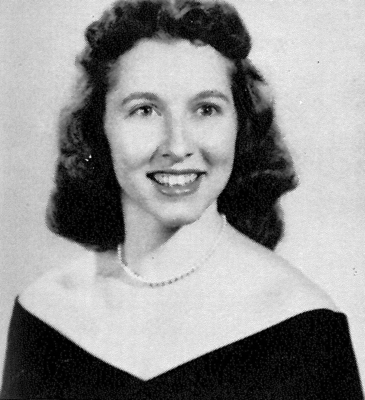
Interview with Marjorie Whitney - OH 446
Marjorie Whitney
OH 446
IN PROCESSING
Interviews with extension members and agents throughout the country documenting the history and development of the extension movement in the U.S. The interviews describe homemaking, child bearing and family management in the small towns and rural areas where they live. They also discuss the role of extension homemakers groups in their lives.
-
Interview with Eleanor Whittemore - OH 426
Eleanor Whittemore
OH 426
IN PROCESSING
Interviews with extension members and agents throughout the country documenting the history and development of the extension movement in the U.S. The interviews describe homemaking, child bearing and family management in the small towns and rural areas where they live. They also discuss the role of extension homemakers groups in their lives.
-
Interview with Bel Wiley - OH 027
Bel Wiley
OH 027
IN PROCESSING
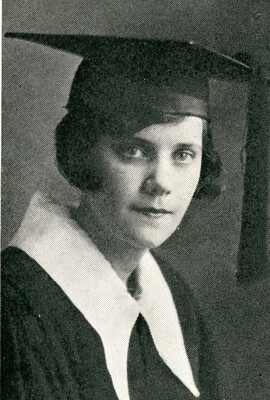
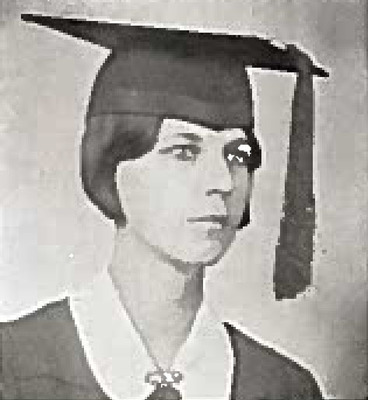
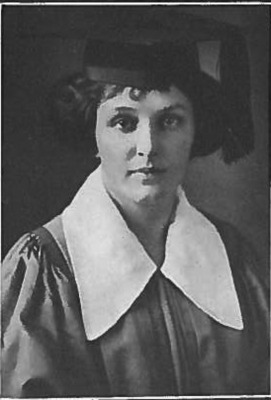
She received a B.A. degree in 1921 from Winthrop College and was a suffragette and daughter of Columbia suffrage leader, Lottie Hammond. This interview includes information about her life, education at Winthrop, and involvement in the suffragist movement, including the Junior Suffragist Club.
-

Interview with William Calandro - OH 720
William Calandro, COVID-19 Pandemic, and Winthrop University
OH 720
This interview was conducted by Winthrop student Kennedy Lawrence ’24 with William “Bill” Calandro as part of Project 2020: A Collaborative Oral History on the Coronavirus Global Pandemic. Calandro, a native of Tampa, Florida, discusses his experiences during the COVID-19 pandemic and the major social and political events of 2020. At the time of the initial COVID-19 shutdown, Calandro was working in professional sports in South Florida for the Florida Panthers. He describes the abrupt cancellation of sporting events, the transition to remote work, and the decision by the Panthers to retain their full-time employees during the shutdown. He also discusses the introduction of COVID-19 vaccination requirements at his workplace and the gradual return to in-person work.
Calandro reflects on the events of 2020 that received his greatest attention, particularly the Black Lives Matter movement and the civil unrest that followed. He also discusses his limited engagement with the 2020 election and his decision not to vote. The interview addresses his perceptions of the gradual return to normalcy, including the resumption of professional sporting events and the return to his workplace in the fall of 2020.
Calandro also discusses the longer-term effects of the pandemic on his professional and educational plans. He explains that the availability of remote work allowed him to continue working for the Florida Panthers while pursuing graduate studies in history at Winthrop University. He describes his decision to leave full-time employment with the Panthers to pursue history and how the option to continue working remotely made it possible for him to maintain a connection to his former career while attending classes. At the time of the interview, Calandro was completing a master’s degree in history and planned to pursue doctoral studies. The interview provides insight into the effects of the COVID-19 pandemic on employment, professional sports, higher education, and individual educational and career decisions.
William Fredrick “Bill” Calandro (b. 1994) is a native of Tampa, Florida, and was a graduate student and graduate assistant in the Department of History at Winthrop University. At the time of the interview, he resided in Columbia, South Carolina.
-
Interview with Ernest D. Williams - OH 125
Ernest D. Williams
OH 125
IN PROCESSING
Subjects include background information, President of the National Association for the Advancement of Colored People (NAACP) and running for political office.
-
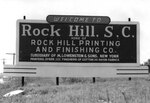
Interview with Gary L. Williams - OH 549
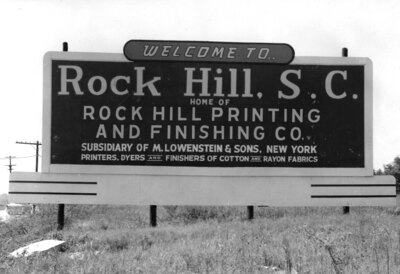
Gary L. Williams, Rock Hill Printing and Finishing Company, Bleachery, and Alexander Keith Windham
OH 549
Gary Williams is a local businessman for Rock Hill, through his efforts he has redeveloped the Cotton Factory, and is currently as of 2017 working as a developer for University Center. In the interview he details the process by which he came to move his office to the old Rock Hill Cotton Factory Building and how he has helped in the redevelopment of the Rock Hill Printing and Finishing Company known as Knowledge Park along the Textile Corridor. He also talked at length about Rock Hill, SC’s development as well.
-
Interview with Jennie Williams - OH 496
Jennie Williams
OH 496
IN PROCESSING
Interviews with extension members and agents throughout the country documenting the history and development of the extension movement in the U.S. The interviews describe homemaking, child bearing and family management in the small towns and rural areas where they live. They also discuss the role of extension homemakers groups in their lives.
-
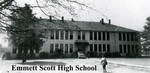
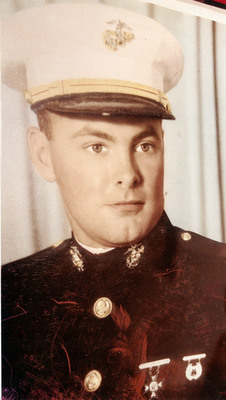
Interview with David Williamson, Jr. - OH 669
David Williamson Jr., Emmett Scott High School, Friendship College, Friendship Nine, and Civil Rights
OH 669
This interview was conducted by Dr. George Garrison with David Williamson for his Emmett Scott History Project. David Williamson was a member of the Friendship Nine that participated in nonviolent protests in Rock Hill South Carolina. The Friendship Nine spent 30 days in jail in 1961 after being convicted of trespassing for sitting at an all-white lunch counter at McCrory’s. This sparked the “Jail, No Bail” strategy that developed as a part of the Civil Rights Movement and protests. Mr. Williamson grew up in Rock Hill and attended Emmett Scott High School and Friendship Junior College. Emmett Scott was the segregated high school for African Americans which was named for Emmett Scott a former aide to Booker T. Washington and President Woodrow Wilson. The school was opened in 1920 and closed in 1970 when full integration was implemented in the Rock Hill School district. Mr. Williamson discusses his childhood and growing up in the black community of Rock Hill. He details his education and experiences at Emmett Scott High School as well as the impact that school made on him and the black community in general. Mr. Isaiah Reid is also present in the interview and relates how the school impacted the local community.
-
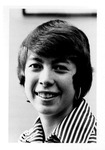
Interview with Margaret Williamson - OH 065
Margaret Williamson
OH 065
In her October 2, 2014 interview with Rebecca Nave, Margaret Williamson speaks of her time at Winthrop University during its transition into a coed institution. She talks of her involvement in various student organizations and athletics. She also talks of the changes in Winthrop, diversity wise, from when she was a student in 1974 to an employee at Winthrop today. This interview was conducted for inclusion into the Louise Pettus Archives and Special Collections Oral History Program.
-
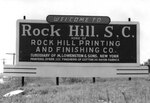
Interview with Samuel Saye Williams, Jr. - OH 551
Samuel Saye Williams Jr., Rock Hill Printing and Finishing Company, Bleachery, and Alexander Keith Windham
OH 551
In his May 16, 2017 interview with Alex Windham, Samuel Saye Williams, Jr. detailed his thoughts and memories of his time at the Rock Hill Printing and Finishing Company referred to locals as the Bleachery. Williams spoke of the time period of the 1960s through the 1970s. His discussions touched on the follow topics: Segregation; integration; race relations; plant management; day to day job responsibilities and actions; technology changes; worker attitudes; and his time as a mechanic at South Carolina Department of Transportation;
-
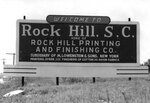
Interview with Thomas L. "Pookie" Williams - OH 550
Thomas L. Williams, Rock Hill Printing and Finishing Company, Bleachery, and Alexander Keith Windham
OH 550
In his June 5, 2017 interview with Alex Windham, Pookie Williams detailed his thoughts and memories of his time at the Rock Hill Printing and Finishing Company referred to locals as the Bleachery. Williams spoke of the time period of the 1950s through 2017 and on the follow topics: Segregation, integration, race relations, plant management, day to day job responsibilities and actions, technology changes, the buyout of the Bleachery by Springs, worker attitudes, the decline of the Bleachery, family, and finally retirement to the year 2017.
-
Interview with Wilma - OH 506
Wilma
OH 506
IN PROCESSING
Interviews with extension members and agents throughout the country documenting the history and development of the extension movement in the U.S. The interviews describe homemaking, child bearing and family management in the small towns and rural areas where they live. They also discuss the role of extension homemakers groups in their lives.
-

Interview with Clarence L. Wilson - OH 155
Clarence Luther Wilson
OH 155
This interview was conducted with Clarence Luther Wilson (1917-1993) and his wife, Doris Griffin Wilson (1918-2006) regarding their experiences working in a local mill. They discuss family life, work attitudes, and experiences growing up in the area. Also discussed are mill villages, black-white relations, unionization, and mill prospects for the future.
This interview was conducted by Victoria Hickcox who was a junior Sociology major at Wellesley College, Wellesley, Mass. The interviews result from her participation in an exchange program involving a study of mill villages. Dr. Jack Turner, Sociology Dept., helped coordinate the research at Winthrop. The original cassette contained three separate interviews conducted by Victoria for the project which included this one, an interview (OH 093) with Vera Taylor Johnston (1913-1988), and an interview (OH 096) with Calvin F. Stallings.
-
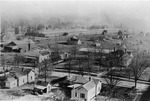
Interview with Elizabeth Moody Wilson - OH 371
Elizabeth Moody Wilson, Fort Mill Manufacturing Company, Springs Industries, and Nancy Biggs Thomas Wofford
OH 371
This interview with Elizabeth Moody Wilson was conducted by Nancy Thomas Wofford for her 1984 Winthrop thesis titled, Fort Mill: Transition From A Farming To A Textile Community, 1880-1920. Subjects include Fort Mill Manufacturing Co., Springs Industries, Ivey’s Mill in Fort Mill, Catawba Power Company. The Evolution of the Early Cotton Textile Mills in York County, SC.
Elizabeth Allison Moody Wilson (1895-1986) was born in Hall County, Georgia where she worked in the cotton fields. She began working for Springs in 1926 in the spinning room and moved to the weaving room one year later. She discusses going to work picking cotton at a young age and picking 300 pounds of cotton a day at 12 years old. At 14 she got her first mill job at 14 years old in the spinning room at the Pacolet Manufacturing Company. By 1926 she was working in the Fort Mill Manufacturing Company. She discusses many aspects of Mill life including working while having children at home and children working in the mills at age 14 with permits, costs of everyday items, union organizers, child labor laws, and how the Mill operated on a daily basis. She discusses mill village life living in Fort Mill generally and the flood of 1916.
* The interview generally starts around the 5-minute mark. The audio has an echo of the same interview in the background.
-

Interview with James Russell Wilson Sr. and Alan Whiteside - OH 084
James Russell Wilson Sr. and Alan Whiteside
OH 084
This is a collection of interviews done in a series by students as an oral history project. Some of the interviews were used for the Bicentennial edition of the Lancaster News, April 9, 1976.
-
Interview with Lucy Wilson - OH 484
Lucy Wilson
OH 484
IN PROCESSING
Interviews with extension members and agents throughout the country documenting the history and development of the extension movement in the U.S. The interviews describe homemaking, child bearing and family management in the small towns and rural areas where they live. They also discuss the role of extension homemakers groups in their lives.
-
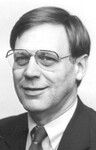
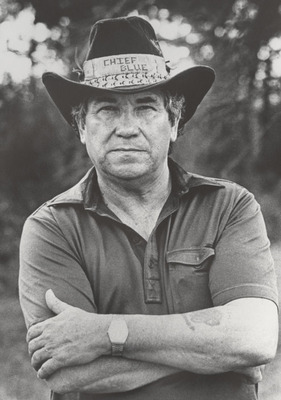
Interview with Melford Wilson - OH 079
Melford Alonzo Wilson
OH 079
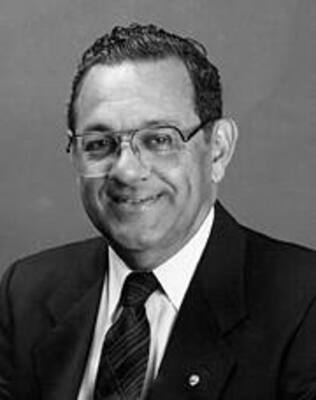
This interview was done by Debbie Mollycheck for articles for the Johnsonian (student newspaper). Debbie Mollycheck is a Winthrop College graduate with a Bachelor of Arts in 1976 and a Master of Science in 1979. The Wilson interview concerns his run for a Rock Hill City Council seat. Dr. Melford Wilson (1939-2024) was a Winthrop professor of Political Science for over fifty years, started the Winthrop Model United Nations, and served at one time as the director of the International Center and Vice President for Academic Affairs. In the interview, Dr. Wilson describes his decision to run for Rock Hill City Council and also discusses his experience during the campaign. During the discussion, he talks about the amount of registered voters in District Six and explains the makeup of District Six. Dr. Wilson would go on to win the seat on the Rock Hill City Council in 1978 and ran for reelection in 1979.
-
Interview with W. H. Winborne - OH 331
W. H. Winborne
OH 331
In his July 1984 interview with Michael Cooke, W. H. Winborne described his work with the Orangeburg Area Sickle Cell Anemia Foundation, the Family Health Center, and the outreach programs related to the foundation. Winborne discussed DHEC’s involvement with sickle cell anemia prevention, the foundation’s role, and the community’s response to the program efforts. This interview was conducted for inclusion into the Louise Pettus Archives and Special Collections Oral History Program.
-
Witches of York “Weird Legends of the Past” - Acc. 186, No. 109
Witches and York County Multiethnic Heritage Project
Accession 186, No. 109
This recording features an unnamed woman reading an article from the Charlotte Observer, dated August 21, 1927, titled “Weird Legends out of the Past: Witches of York,” by Earnest Jackson. The article recounts four legends of witchcraft from York County, South Carolina, describing beliefs and stories that had been preserved through local tradition. Jackson notes that two of the accounts, concerning Mrs. Bobbi Fox and Mrs. Rebecca Biggert, were related by Dr. Maurice A. Moore, a York County historian and investigator who died in 1899. The stories of Mrs. Abigail McPherson and Abner Wayne were reportedly preserved through oral tradition and had not previously appeared in print.
The recording relates the four stories in detail. The account of Mrs. Bobbi Fox describes her alleged ability to cast spells and an attempt by local residents to cure Nathaniel Rainy by obtaining her blessing. The story of Mrs. Abigail McPherson concerns a woman reputed to transform herself into a crow and spy on her neighbors. Mrs. Rebecca Biggert is described as a witch who allegedly rode Moses Gatty at night to gatherings of witches, while a local “witch doctor” eventually claimed to cure him. The final story, concerning Abner Wayne, describes his attempt to spy on a New Year’s gathering of witches by hiding in a chimney, where he was discovered, covered with pins, and expelled from the gathering. The recording preserves the article’s descriptions of these legends, including references to local places, families, and traditions in York County.
The recording includes several interruptions and fades, including telephone ringing, brief periods of missing audio, and an instruction to turn the tape over before the second part of the reading. A child can also be heard laughing briefly during the recording. The material provides documentation of early twentieth-century efforts to preserve and recount York County folklore and oral traditions.
-
Interview with Wade Hampton Witherspoon - OH 134
Wade Hampton Witherspoon
OH 134
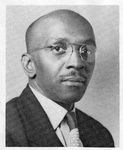
This interview was conducted with Mr. Wade Hampton Witherspoon (1908-1996) and his wife Emma K. (possibly Kershaw) Witherspoon (1915-1995). The first half of the interview is with Emma Witherspoon and she discusses her family and childhood growing up in South Carolina. She discusses her education and attending college and then her teaching career, as well as her experiences living in South Carolina. The second part of the recording beginning at the 1:02:32 mark consists of the interview with Mr. W. H. Witherspoon. Mr. Witherspoon graduated from the Colored Normal Industrial Agricultural and Mechanical College of South Carolina (now South Carolina State University) in 1930. He is a Rock Hill native attending Emmett Scott when it opened and later became principal on Emmett Scott High School from 1959-1967. In the interview Mr. Witherspoon discusses Rock Hill history, his childhood, his family, and his education. A large portion of his interview includes his discussion on the education of African Americans in South Carolina with a focus on secondary education. He touches on the Civil Rights movement in Rock Hill, SC towards the end of the interview.
-
Interview with William D. Wolfe - VHP 022
William D. Wolfe
VHP 022
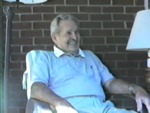
In his October 20, 2003 interview with Alan Garmendia, William D. Wolfe recollects about his time in the Navy during WWII, the Korean War, and Vietnam. Wolfe shares the details of his work in the Navy on an experimental destroyer testing new sonar. The interview concludes with reminiscences of the South Pacific and pastimes of soldiers. This interview was conducted for inclusion into the Louise Pettus Archives and Special Collections Oral History Program.
-
Interview with Mim Woodring - OH 333
Mim Woodring
OH 333
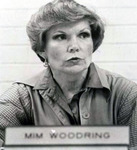
Miriam L. “Mim” Woodring (1928-2012) was a member of Aiken County Council for 12 years representing District 4. In this interview she discusses her experiences with the Travelers (often referred to as “Gypsies”). She discusses how they were perceived by the community and the area.
The Travelers (often referred to as “Gypsies”) are descendants of the Irish subculture of itinerant Irish men and women who emigrated from Ireland to the northern U.S. after the famine of 1840 and then migrated to the southeastern U.S. They settled in Aiken County, South Carolina in 1963 in an area referred to as the Village of Murphy’s Travelers.
-
Interview with Zelma Wood - OH 474
Zelma Wood
OH 474
IN PROCESSING
Interviews with extension members and agents throughout the country documenting the history and development of the extension movement in the U.S. The interviews describe homemaking, child bearing and family management in the small towns and rural areas where they live. They also discuss the role of extension homemakers groups in their lives.