


The Oral History Program's mission is to record unique life histories, documenting historical events and memories of our time by preserving and adding these voices to the historical record. The Pettus Archives have been collecting and preserving stories, personal accounts, and recollections through recorded interviews as part of the Oral History Program since 1973. The Archives holds more than 800 interviews in audio, video and text formats, on a wide variety of subjects, including life at Winthrop, Rock Hill, SC and the Catawba Region and people, mill life and workers, American Wars and conflicts, Veteran History Project, women in politics and society, African American, and many other topics.
Disclaimer: The content of oral history interviews are personal and interpretive in nature, relying on memories, experiences, perceptions, and opinions of the interviewee. They do not represent the policy, views, or official history of Winthrop University and the University makes no assertions about the veracity of statements made by individuals participating in the Oral History Program.










-
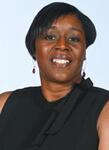
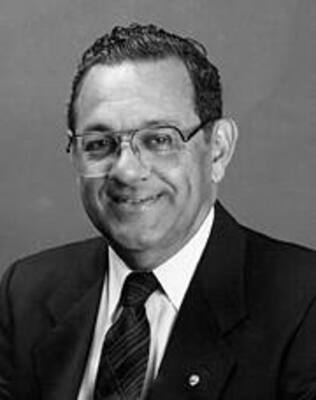
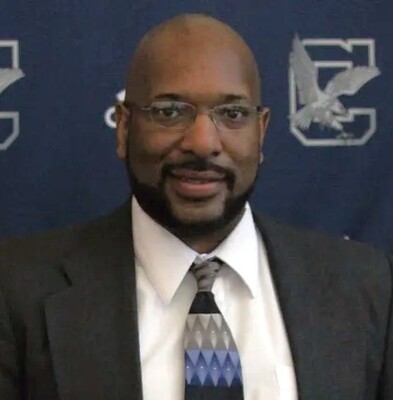
Interview with Semeka Randall Lay - OH 758
Semeka Randall Lay, Winthrop University, Women's Basketball, and COVID-19 Pandemic
OH 758
This interview was conducted by Olivia “Liv” Paxon with Semeka Randall Lay as part of Project 2020: A Collaborative Oral History. Coach Randall Lay discusses her upbringing, collegiate years, and later professional career as a WNBA basketball player and NCAA Division I women’s basketball coach. She details her journey as part of Winthrop University’s women’s basketball coaching team (2019-present), notably during the COVID-19 pandemic. She also shares her experiences as a Black athlete, coach, and woman. Notable topics of conversation include women’s basketball, Winthrop athletics, racial and gender disparities, and the COVID-19 pandemic.
Semeka Chantay Randall-Lay (b. 1979), a native of Cleveland, Ohio, is the head coach of Winthrop University’s women’s basketball team, a position she took on in 2021. She is also a former collegiate and professional basketball player. Coach Randall Lay previously served as associate (2019-2020) and interim head coach (2020-2021) for the women’s basketball team at Winthrop.
Spearheaded by Dr. O. Jennifer Dixon-McKnight, an Assistant Professor of History and African American studies at Winthrop University, Project 2020 is best summarized in her words: “The goal was to conduct interviews that explored the various ways in which Americans were experiencing and being impacted by the various watershed moments that emerged during 2020 (the global pandemic, social unrest, financial challenges, issues with healthcare, etc.)."
-

Interview with Shacara Taylor - OH 768
Shacara Taylor, COVID-19 Pandemic, and Black Women
OH 768
This interview was conducted by Autumn Jackson with Shacara Taylor as part of Project 2020: A Collaborative Oral History. Taylor discusses her experiences amid the COVID-19 pandemic as a Black woman, mother, and educator. She details the challenges she faced as a teacher in terms of the evolution of the classroom experience (virtual learning, COVID-19 protocols, etc.). She also shares her pregnancy experience during the pandemic and difficulties she later confronted trying to balance motherhood and teaching. Other notable topics of conversation include mental health, financial security, marriage, and parenting.
Shacara Janai Hanna Taylor (b. 1995) is a native of Lake City, SC and is a secondary English teacher. She earned her bachelor’s degree in English from Francis Marion University in 2017. The same year, she began teaching English at Dillon High School in Dillon, SC.
Spearheaded by Dr. O. Jennifer Dixon-McKnight, an Assistant Professor of History & African American Studies at Winthrop University, Project 2020 is best summarized in her words: “The goal was to conduct interviews that explored the various ways in which Americans were experiencing and being impacted by the various watershed moments that emerged during 2020 (the global pandemic, social unrest, financial challenges, issues with healthcare, etc.).”
-

Interview with Shaniya Simmons - OH 762
Shaniya Simmons, Black Women, and Social Justice
OH 762
This interview was conducted by Delmarie Wilson with Shaniya Simmons as part of Project 2020: A Collaborative Oral History. In the interview, Simmons shares her experiences as a Black woman navigating 21st-century American society, notably in the context of the year 2020. She particularly recounts her participation in social justice protests during the summer of 2020. Notable topics of conversations identity, gender inequality, race, racism, social activism, police brutality, and the Black Lives Matter movement.
Shaniya Simmons (b.2000) is a native of Atlanta, GA and, at the time of the interview, was a college student at Winthrop University in Rock Hill, SC.
Spearheaded by Dr. O. Jennifer Dixon-McKnight, an Assistant Professor of History and African American Studies at Winthrop University, Project 2020 is best summarized in her words: “The goal was to conduct interviews that explored the various ways in which Americans were experiencing and being impacted by the various watershed moments that emerged during 2020 (the global pandemic, social unrest, financial challenges, issues with healthcare, etc.)."
-

Interview with Shauntoria Currence - OH 727
Shauntoria Currence, Black Women, and Small Businesses
OH 727
This interview was conducted by Winthrop student Kaniya Simpson with Shauntoria Currence as part of Project 2020: A Collaborative Oral History on the Coronavirus Global Pandemic, with specific emphasis on Black women in business. Currence, a Rock Hill, South Carolina, native, discusses her experiences as a Black woman and business owner, including balancing her roles as an entrepreneur, accountant, mother, wife, and community member. She describes the pride she takes in operating a Black-owned business and her desire to serve as an example to other Black women interested in entrepreneurship. Currence discusses the importance of organization and financial management, separating her personal and business finances, and balancing family responsibilities with the demands of running a business.
Currence and her husband own and operate New Generation Installation and Repair, LLC, formerly New Generation Electrical Contractors, in Rock Hill, South Carolina. The company provides residential and commercial electrical contracting and installation services. Currence discusses the company’s commitment to providing quality and affordable services, as well as mentoring individuals and serving local churches and community organizations. She describes her educational background in psychology and entrepreneurship and explains how her career path ultimately led her into business ownership. She also discusses her plans to expand the company beyond South Carolina and create a business that can be passed down to future generations.
A significant portion of the interview focuses on Currence’s vision for her company as an employer. She discusses her desire to provide employees with livable wages and good benefits and to create a workplace where employees are proud to work. She also reflects on the importance of having a strong support system when navigating the challenges of entrepreneurship. Currence discusses her role as a Black woman in a predominantly male industry and her desire to demonstrate to other members of the Black community that successful business ownership is possible.
Completed as part of Dr. O. Jennifer Dixon-McKnight’s HIST/AAMS/WMST-517: Black Women in American course in the fall of 2021, this interview is part of a subseries titled Project 2020: A Collaborative Oral History on Black Women Business Ownership.
-
Interview with Lloyd Braxton "Bud" Shaw and Ruby Shaw Moore - OH 267
Lloyd Braxton Shaw and Ruby Shaw Moore
OH 267
This interview discusses the Shaw family and interviews both Lloyd Braxton “Bud” Shaw (1913-1993) and Ruby Ellena Shaw Moore (b. 1910). Bud and Ruby Shaw were born in Pineville, North Carolina and later moved with family to the upstate of South Carolina. Bud and Ruby discuss their parents (Thomas Palmer Shaw and Lois L. Little Shaw) and grandparents, where they lived and how they moved around a lot during their childhood, what their parents did for hobbies and for work, and their family bible. They also share different memories from their childhood.
-
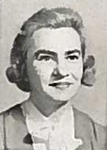
Interview with Celesta Wine Shippey - OH 086
Celesta Wine Shippey
OH 086
IN PROCESSING
Professor of English at Winthrop (1941-1965). Subjects include the biographical and family background of Mrs. Shippey, her views on the educational system in the U.S. and Brussells, where she lived until 1914, the Brethren Church, her teaching experience at Oak Park Junior College, Winthrop College, Pakistan and the AAUP censorship of Winthrop College. She also discusses her travels around the world, particularly China and Russia.
-
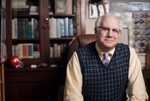
Interview with Jason H. Silverman - OH 291
Jason H. Silverman
OH 291
In his July 30, 2015 interview with Michelle Dubert-Bellrichard, Jason Silverman details his career at Winthrop since 1984. Silverman recalls the administrations of President Lader, Piper, DiGiorgio, and Comstock. In particular, Silverman recounts the events leading up to the vote of no confidence in 1995, his involvement as chair of faculty conference, and what happened on campus after the motion failed to pass. This interview was conducted for inclusion into the Louise Pettus Archives and Special Collections Oral History Program.
-
Interview with Modjeska Monteith Simkins - OH 646
Modjeska Monteith Simkins
OH 646
This interview was conducted with Modejeska Monteith Simkins (1899-1992) who was a Civil Rights leader in South Carolina and an advocate of public and social reform. In this interview, Simkins discusses her background, upbringing, and her education. She also discusses black politics in the South. The NAACP, the fight for blacks to vote, and the Civil Rights Movement.
-
Interview with Modjeska Monteith Simkins - OH 78
Modjeska Monteith Simkins
OH 078
This interview was conducted with Modejeska Monteith Simkins (1899-1992) who was a Civil Rights leader in South Carolina and an advocate of public and social reform. The interview began again with the questions of Mrs. Simkins family life. Her mother was a house slave until the Emancipation Proclamation and Mrs. Simkins relates stories of her childhood, parents, education, race relations, health services, nutrition and blacks in S.C. and S.C. politicians. This tape gives deep insight into the conditions, opinions, beliefs and attitudes of a black family from slavery through Reconstruction. The interview is interrupted and continued with questions from Margaret Eppehimer of the Winthrop College Public Affairs Office. Also the interview ends abruptly.
-
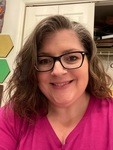
Interview with Leah Simmonds - OH 658
Leah Simmonds
OH 658
This interview was conducted for the as part of the 20th Anniversary of the September 11th Terrorist Attacks on the United States. This effort was to produce a history of the university’s, as well as the community’s, response in the days and weeks following the attacks. A key aspect of the project was a series of audio-taped interviews conducted with various members of the Rock Hill and Winthrop communities who felt their stories needed to be shared.
This interview is of Mrs. Leah Simmonds, Financial Analyst in the College of Arts and Sciences at Winthrop University. In this interview with Andrew Russell, Leah Simmonds describes her thoughts and memories of the September 11, 2001 terrorist attacks. Ms. Simmonds describes her experience during the events, the response of the company she worked for, and the response of the Greater D.C. area during the attacks.
-

Interview with Essie Simmons - OH 162
Essie Simmons
OH 162
IN PROCESSING
Interviews with extension members and agents throughout the country documenting the history and development of the extension movement in the U.S. The interviews describe homemaking, child bearing and family management in the small towns and rural areas where they live. They also discuss the role of extension homemakers groups in their lives.
-
Interview with Beatriz Simon - OH 153
Beatriz Simon
OH 153
IN PROCESSING
This recording includes information about foreign student life at Winthrop. The interviewee is from San Salvador, El Salvador and much information concerns her native country.
-
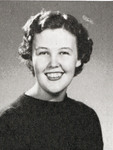
Interview with Elizabeth "Betty" Simpson - OH 279
Elizabeth Anne Hoffman Simpson
OH 279
This interview was conducted with Elizabeth “Betty” Hoffman Simpson who attended Winthrop from 1954-1956 as a 2-year business major, but did not graduate. Betty discusses what it was like attending Winthrop in the 1950s. She was a Rock Hill native and was a “day student.” She discusses attending Winthrop, including the uniforms and the classes she took. One of these classes was a shorthand notetaking class. She also discusses coeducation and how excellent her professors were. After attending Winthrop, Betty worked for a year for the Clemson Extension Office before it moved from Rock Hill to Clemson, SC. She then began working at Winthrop in 1958 and worked for the College for 34 years until she retired. She worked in 13 different jobs in several different departments.
-
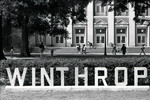
Interview with Kimberly Paul Simpson - OH 281
Kimberly Paul Simpson
OH 281
This interview is with Mrs. Kimberly Paul Simpson who attended Winthrop from 2002 to 2005 in order to get a Master’s in Early Childhood and Curriculum Development (December 15, 2005). Before she attended Winthrop, she graduated from College of Charleston in 1991 with her undergraduate degree. Mrs. Simpson discusses her time at Winthrop as a graduate student, including being a member of the Phi Delta sorority, her favorite professors and classes, learning teaching games and strategies, working in the library, and comparing Winthrop and the College of Charleston. She also talks about her career as a teacher, including her time at Mt. Holly Elementary, and how to help students with comprehension and her personal teaching style. Mrs. Simpson also mentions touring Winthrop with her daughter and the many relatives of hers that have graduated from Winthrop including her father.
-
Interview with Shannon Simpson - OH 273
Shannon Simpson
OH 273
In her June 12, 2013 interview with Martha Manning, Shannon Simpson detailed her time as an undergraduate student at Winthrop from 1995-1999. Discussed are details of Simpson’s life as a student – residence halls, classes, meals – rules and regulations on campus, and her desire to go back to Winthrop as a graduate student in 2013. Included are Simpson’s thoughts on professors, traditions, and cultural events on campus. Simpson also shares details of her career as a police officer after attending Winthrop to a transition as an employee in Human Resources. This interview was conducted for inclusion into the Louise Pettus Archives and Special Collections Oral History Program.
-
Interview with Mrs. B. N. Simrall - OH 260
Mrs. B. N. Simrall
OH 260
IN PROCESSING
Interviews with extension members and agents throughout the country documenting the history and development of the extension movement in the U.S. The interviews describe homemaking, child bearing and family management in the small towns and rural areas where they live. They also discuss the role of extension homemakers groups in their lives.
-
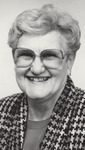
Interview with Zeta Gardner Sistare
Zeta Gardner Sistare
OH 527
Interview conducted by Emily Deinert on February 27, 2018, for the Louise Pettus Archives and Special Collections Oral History Program. Interviewee Zeta Gardner Sistare, Winthrop alumna (two-year business/associate degree, class of 1955), recounts her upbringing on Flat Creek near Lancaster, her large Gardner family, and early schooling.
Sistare describes why she chose Winthrop (family connections, relatives in Rock Hill, and a work scholarship), her campus and residential experience (Bancroft, McLaurin, roommate anecdotes), and college routines—uniforms, weekly room inspections, family-style dining, study hours, and student activities. She worked in the Bursar’s office, took required business courses (shorthand, typing, economics), and remembers faculty such as Professor Sturgis and Mrs. Bass. Sistare also recalls social traditions (class events, dunking in the campus fountain) and intramural/physical-education requirements.
Following Winthrop, she held civil service work at Shaw AFB, married a Navy man (Joe Sistare), accompanied him during military service, and later worked in school offices and as a teacher’s aide. She reflects on family life (three children; one attended Winthrop briefly, others attended USC) and long-term community involvement.
A devoted Winthrop basketball fan, Sistare has followed the program since its early years and remains an enthusiastic supporter. She credits Winthrop with practical training and confidence that aided her career and life.
-
Interview with Mary Skelley - OH 386
Mary Skelley
OH 386
IN PROCESSING
Interviews with extension members and agents throughout the country documenting the history and development of the extension movement in the U.S. The interviews describe homemaking, child bearing and family management in the small towns and rural areas where they live. They also discuss the role of extension homemakers groups in their lives.
-
Interview with Elsa Skiles - OH 375
Elsa Skiles
OH 375
IN PROCESSING
Interviews with extension members and agents throughout the country documenting the history and development of the extension movement in the U.S. The interviews describe homemaking, child bearing and family management in the small towns and rural areas where they live. They also discuss the role of extension homemakers groups in their lives.
-
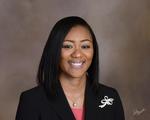
Interview with ZaDonna Slay - OH 659
ZaDonna Slay
OH 659
This interview was conducted for the as part of the 20th Anniversary of the September 11th Terrorist Attacks on the United States. This effort was to produce a history of the university’s, as well as the community’s, response in the days and weeks following the attacks. A key aspect of the project was a series of audio-taped interviews conducted with various members of the Rock Hill and Winthrop communities who felt their stories needed to be shared.
This interview is of Ms. ZaDonna Slay, Admissions Coordinator and Instructor for the Master of Social Work at Winthrop University. In her interview with Andrew Russell, ZaDonna Slay discusses her thoughts and memories during the September 11, 2001 terrorist attacks. Mrs. Slay describes her experiences as well as the response of her local community to the events.
-
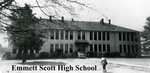
Interview with Alicia Faye Smith - OH 695
Alicia Faye Smith and Emmett Scott High School
OH 695
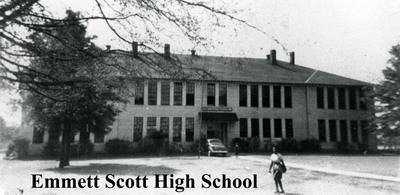
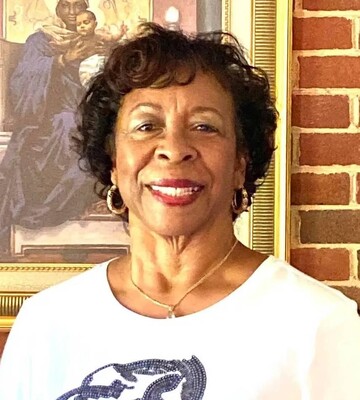
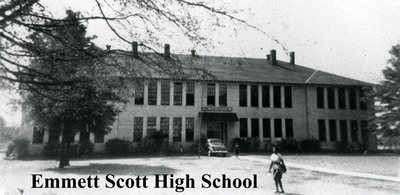
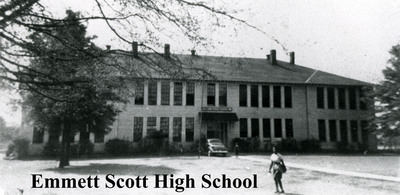
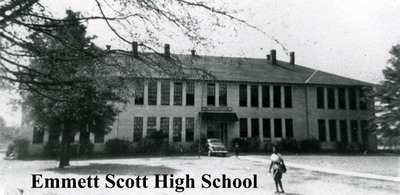
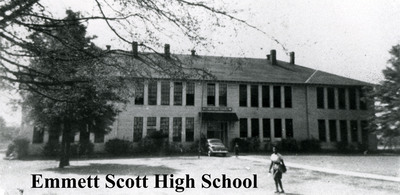
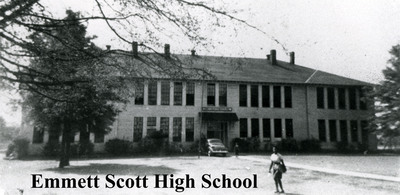
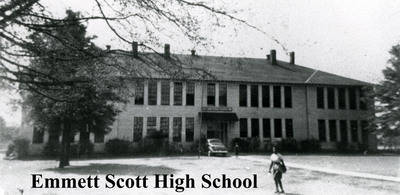
This interview was conducted by Dr. George Garrison with Alicia Faye Smith for the Emmett Scott History Project. Emmett Scott High School was the segregated African American high school in Rock Hill South Carolina which was named for Emmett Scott who was an aide to Booker T. Washington and President Woodrow Wilson. Emmett Scott High School opened in 1920 and closed in 1970 when integration was implemented in Rock Hill School District. Mrs. Smith attended Emmett Scott from 1969 to 1970 and then was transferred to Rock Hill High school after integration. Mrs. Smith discusses her education and experiences during this time. She details how she feels both segregation and integration impacted her education. She discusses the tension and conflict that arose during the process as well as the student walkouts that occurred. Mrs. Smith discusses the ‘Rattlercats’ which is how the students that were transferred from Emmett Scott referred to themselves.
-
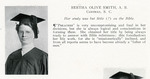
Interview with Olive Bertha Smith - OH 167
Olive Bertha Smith
OH 167
Olive Bertha Smith from Spartanburg County, South Carolina (1888-1988) graduated from Winthrop College in 1913 and served as a Baptist missionary in China for 42 years (1917-1959). She is also the author of several inspirational books, and is credited for her work as a part of the “Shantung revival” in China in the late 1920s. In this interview, Ms. Smith discusses her teaching career after graduating from Winthrop, attending seminary in Kentucky in 1914, getting into the mission field, church services and activities, teaching night school in her community, and leaving for China. She discusses her 42 years in China as a Baptist missionary, having to retire at 70 years old, the Foreign Mission Board, learning the language, training for missions work, working in China and Taiwan, and teaching English to the children. Ms. Smith also discusses her first book, Go Home and Tell (1965), which was used as a study book and became a best seller. She also briefly mentions her second and third books. Ms. Smith discusses her class pin, her involvement with religious groups at Winthrop College, her homesickness while in China, Chiang Kai-shek, her personal relationship with God, small religious communities from the past, cooking Chinese food, her travels to speak at different churches after retirement, her memories of Dr. David B. Johnson, and Dr. Glen Thomas.
-

Interview with Benjamin Gordon - OH 367
South Carolina Legislative Black Caucus
OH 367
IN PROCESSING
-
Interview with Julia Souza, Mary Soon, and Kazuko Kurose - OH 436
Julia Souza, Mary Soon, and Kazuko Kurose
OH 436
IN PROCESSING
Interviews with extension members and agents throughout the country documenting the history and development of the extension movement in the U.S. The interviews describe homemaking, child bearing and family management in the small towns and rural areas where they live. They also discuss the role of extension homemakers groups in their lives.