


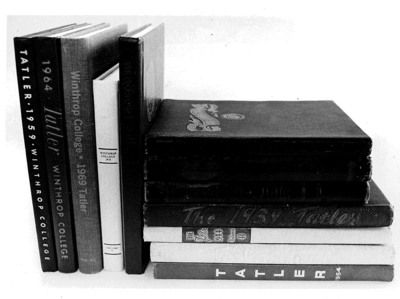
The Oral History Program's mission is to record unique life histories, documenting historical events and memories of our time by preserving and adding these voices to the historical record. The Pettus Archives have been collecting and preserving stories, personal accounts, and recollections through recorded interviews as part of the Oral History Program since 1973. The Archives holds more than 800 interviews in audio, video and text formats, on a wide variety of subjects, including life at Winthrop, Rock Hill, SC and the Catawba Region and people, mill life and workers, American Wars and conflicts, Veteran History Project, women in politics and society, African American, and many other topics.
Disclaimer: The content of oral history interviews are personal and interpretive in nature, relying on memories, experiences, perceptions, and opinions of the interviewee. They do not represent the policy, views, or official history of Winthrop University and the University makes no assertions about the veracity of statements made by individuals participating in the Oral History Program.








-

Interview with Brenda Van Meter - OH 514
Brenda Van Meter
OH 514
IN PROCESSING
Interviews with extension members and agents throughout the country documenting the history and development of the extension movement in the U.S. The interviews describe homemaking, child bearing and family management in the small towns and rural areas where they live. They also discuss the role of extension homemakers groups in their lives.
-
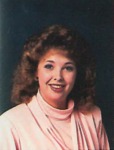
Interview with Regina Varnadore - OH 277
Regina Varnadore
OH 277
In her June 26, 2013 interview with Martha Manning, Regina Varnadore details her time at Winthrop from 1986-1989 as an Elementary Education major. In particular, Varnadore describes the process of earning a degree in Elementary Education. Varnadore discusses her experience student teaching and her career as a teacher. Varnadore mentions her opinions on education in Rock Hill and employees in the school district. Provided is information on Varandore’s family, the story of Varnadore earning her Master’s degree, and her future in the teaching profession. This interview was conducted for inclusion into the Louise Pettus Archives and Special Collections Oral History Program.
-
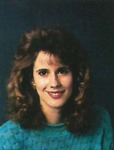
Interview with Cynthia Venables - OH 278
Cynthia Venables
OH 278
In her July 3, 2013 interview with Martha Manning, Cynthia Burris Venables shares her experiences at Winthrop from 1985-1989, as well as her career teaching English. Discussed is Venables coursework as an English major and the rigor of her studies. Additionally, Venables talks about Latin and Biology courses and who her favorite professors were. Venables details what it is like teaching in the 21st Century, her opinions on technology and teaching, and her accomplishments as an educator.
-

Interview with David E. Vipperman and Elizabeth King Vipperman - OH 633
David E. Vipperman and Elizabeth King Vipperman
OH 633
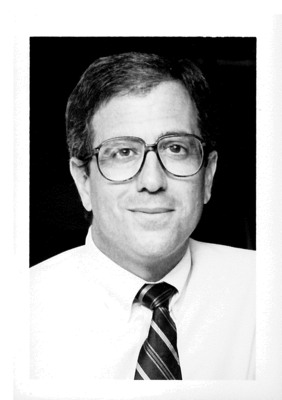
This interview is part of the Winthrop History Project, an initiative led by Winthrop President Emeritus Dr. Anthony DiGiorgio and Rebecca Masters to document the university’s transformation during Dr. DiGiorgio’s 24-year tenure. Designed to supplement Dr. Ross Webb’s The Torch is Passed, which chronicles Winthrop’s history up to Dr. DiGiorgio’s presidency, this project preserves firsthand accounts of the institution’s evolution through recorded interviews with key members of the Winthrop community.
This interview features David E. Vipperman and Elizabeth King “Kloo” Vipperman. David Vipperman served as a member of the Winthrop Board of Trustees from 2006 to 2011 and was appointed to the South Carolina Educational Television Commission in 2012 by Governor Nikki Haley. Kloo Vipperman, a Winthrop alumna, served on the Winthrop Alumni Association Board and comes from a family with deep ties to the university. In this conversation, they share their experiences and insights on working with President Dr. Anthony DiGiorgio and reflect on their connections to Winthrop.
-

Come-See-Me Festival Interview - OH 048
David Vipperman, Phil Pierce, Dennis Parlow, Bob Hope, Charlie McConnell, Vernon Grant, C. H. Albright, Emmett Jerome, and Come-See-Me Festival
OH 048
In this April 21, 1978 interview, the origins and history of the Come-See-Me Festival are discussed. Included is an overview of the events for the 1978 event. This interview was conducted for inclusion into the Louise Pettus Archives and Special Collections Oral History Program
-
Interview with Mary Kell Wade - OH 122
Mary Kell Wade
OH 122
IN PROCESSING
Mrs. Wade was the granddaughter of John R. Schorb. Mrs. Wade identifies photographs from the John R. Schorb Collection to be used in an article for Sandlapper magazine by Ron Chepesiuk. She also discusses her genealogical research on the Schorb family.
-
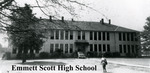
Interview with Gloria Walker - OH 691
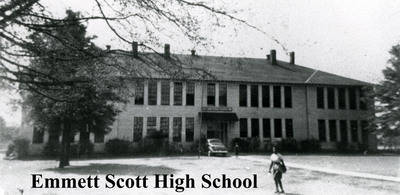
Gloria Walker, Emmett Scott High School, and Civil Rights
OH 691
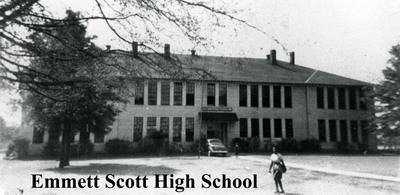
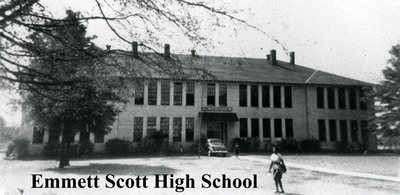
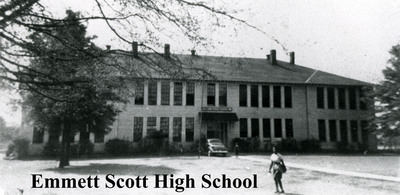
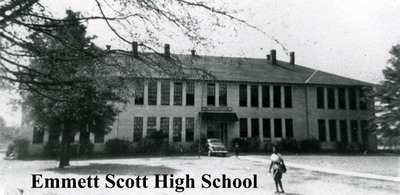
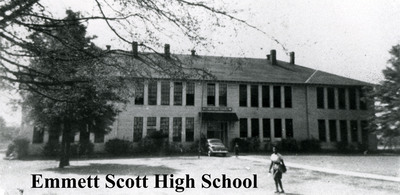
This interview was conducted by Dr. George Garrison with Gloria Walker with a focus on the History of Emmett Scott High School. Emmett Scott was the segregated high school for African-Americans, which was named after Emmett Scott, a former aide to Booker T. Washington and President Woodrow Wilson. The school opened in 1920 and was closed in 1970 when full integration was implemented in Rock Hill, SC schools. Gloria Walker is a 1969 graduate of Rock Hill High School discusses attending Rock Hill Schools during integration and the civil rights movement at large.
-
Interview with Hattie Walker - OH 66
Hattie Walker
OH 066
This interview with Ms. Hattie Walker discusses the lives of African Americans in Chester, South Carolina around the late 19th and early 20th centuries. Ms. Walker talks about what she remembers being told about slavery and what she remembers from her childhood about share cropping, going to school and church, shopping, railroads, lynching and the KKK, not being able to vote, segregation, presidents, and African American leaders. She also talks about what changes she would like to see made in the south that would further benefit the lives of African Americans.
-
Interview with Alice Wand - OH 478
Alice Wand
OH 478
IN PROCESSING
Interviews with extension members and agents throughout the country documenting the history and development of the extension movement in the U.S. The interviews describe homemaking, child bearing and family management in the small towns and rural areas where they live. They also discuss the role of extension homemakers groups in their lives.
-
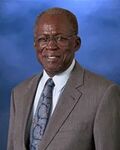
Interview with McKinley Washington - OH 357
McKinley Washington
OH 357
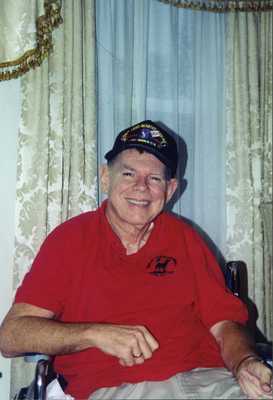
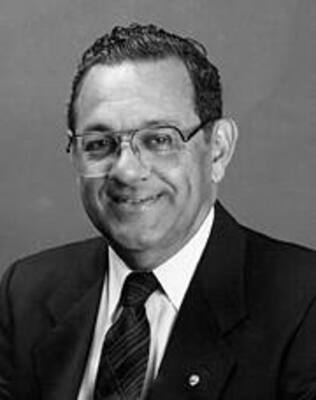
Rev. McKinley Washington (1936-2022) was a lawmaker having served in the South Carolina House of Representatives from 1975 through 1990 and in the South Carolina Senate from 1990 through 2000. He also served as pastor of the Edisto Presbyterian Church for 50 years. In this interview. Rev. Washington discusses his up bringing and his career, while focusing on his role as chairman of the South Carolina Legislative Black Caucus.
-
Interview with Tressa Waters - OH 475
Tressa Waters
OH 475
IN PROCESSING
Interviews with extension members and agents throughout the country documenting the history and development of the extension movement in the U.S. The interviews describe homemaking, child bearing and family management in the small towns and rural areas where they live. They also discuss the role of extension homemakers groups in their lives.
-
Interview with Tom Watson and I. A. Crawley - OH 075
Tom Watson and I. A. Crawley
OH 075
IN PROCESSING
-
Interview with Hope Weatherly - OH 271
Hope Weatherly
OH 271
In her May 22, 2013 interview with Martha Manning, Hope Weatherly detailed her thoughts and memories at Winthrop from 1970-1976. In particular, Weatherly discusses the evolution of her studies at Winthrop, starting as a music major then graduating with a degree in education. Weatherly recalls her opinions on University presidents, professors, and food. Weatherly concludes her interview by discussing her career as a social worker and the challenges she faced in her profession.
-
Interview with Ann Webb - OH 493
Ann Webb
OH 493
IN PROCESSING
Interviews with extension members and agents throughout the country documenting the history and development of the extension movement in the U.S. The interviews describe homemaking, child bearing and family management in the small towns and rural areas where they live. They also discuss the role of extension homemakers groups in their lives.
-
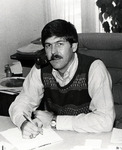
Interview with Thomas O. Webb - OH 786
Thomas O. Webb and Dinkins Program Board
OH 786
This interview was conducted by Winthrop student, Debbie Mollycheck, for an article for the Johnsonian (student newspaper) that was published on April 26, 1976 titled, “Webb: “Activities Enhance Education.” Debbie Mollycheck is a Winthrop College graduate with a Bachelor of Arts in 1976 and a Master of Science in 1979 and worked for a time as a student editor for the Johnsonian. She conducted this interview with Thoms O. Webb, Jr. who was the Director of the Dinkins Student Center from 1975-2001. The subject of the interview is the Dinkins Program Board which started during the 1975/1976 academic year with 8 sub-committees and the interview starts with an interview of a student who was running for the 1976/1977 President of the Dinkins Program Board.
The first 4:14 minutes of the recording are of an unknown student (possibly Debra J. Kimbrell, ’77, who served on the 1975/1976 ATS Committee and served as President of the Dinkins Program Board during the 1976/1977 academic year) who was serving on the ATS Committee or the Special Events Committee the year prior (1975/1976) and then ran for President of the Dinkins Program Board for the 1976/1977 academic year. The first interviewee discusses what the Dinkins Program Board is and the 8 committees that it comprises, their role in organization and what the role of the president is.
The recording (00:04:14 – 00:36:01) then switches over to an interview with Dinkin Student Center Director, Tom Webb. Tom Webb discusses the differences between the Dinkins Program Board, the Dinkins Policy Board, and the Dinkins Student Center. He discusses the differences in makeup and the duties of the committees. Tom Webb also discusses the change in social atmosphere that has occurred at Winthrop with the admission of men as students. Webb also talks about the different types of Winthrop students, and the effect that their living situation has on their attendance of Winthrop events.
-
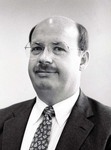
Interview with Roger Weikle - OH 634
Roger Dale Weikle
OH 634
This interview was conducted as part of the Winthrop History Project, an initiative led by Winthrop President Emeritus Dr. Anthony DiGiorgio and Rebecca Masters. The project aimed to document Winthrop’s transformation over Dr. DiGiorgio’s 24-year tenure, tracing the institution’s evolution from Winthrop College to Winthrop University. Designed to supplement Dr. Ross Webb’s The Torch is Passed, which chronicles Winthrop’s history up to Dr. DiGiorgio’s presidency, this project sought to provide a comprehensive account of this significant period.
A key component of the initiative was a series of recorded interviews with members of the extended Winthrop community who played a role in shaping the university’s progress. These firsthand narratives preserve the voices, experiences, and perspectives of those who contributed to Winthrop’s growth and development.
This interview features Dr. Roger Dale Weikle, who dedicated 42 years to Winthrop University, serving as a professor in the Department of Management and Marketing from 1975 until his retirement in 2017. He held the position of Dean of the College of Business Administration from 1996 to 2017. In this discussion, Dr. Weikle reflects on his experiences and insights while working with Winthrop President Dr. Anthony DiGiorgio.
-
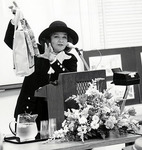
Interview with Frankie Welch - OH 183
Frankie Welch
OH 183
Frankie Welch, born Mary Frances Barnett (1923- ), was a fashion designer and a former Distinguished Visiting Professor of Merchandising and Design in the School of Consumer Science at Winthrop College from 1982 through 1985. She became well-known for designing scarves for many prominent political figures from 1960s to 1990s, a dress design known as “The Frankie,” and a dress worn by First Lady Betty Ford in her official portrait. Subjects of the interview include Welch’s background, interest in designing, consulting business, relationships with family, friends, and Winthrop College and her views on the ERA.
-
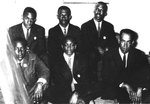
Interview with James F. Wells - OH 682
James F. Wells
OH 682
This interview was conducted by Dr. George Garrison with James Wells with a focus on the History of Emmett Scott High School. Emmett Scott was the segregated high school for African-Americans, which was named after Emmett Scott, a former aide to Booker T. Washington and President Woodrow Wilson. The school opened in 1920 and was closed in 1970 when full integration was implemented in Rock Hill, SC schools. Mr. James F. Wells (b. ca. 1942 - d. 2018) was a native of Rock Hill, SC and graduated from Emmett Scott High School in 1959 and attended Friendship Junior College. He was a member of a South Carolina civil rights group known as the Friendship Nine and spent a month in jail in 1961 after he and eight other black men were charged with trespassing at a whites-only lunch counter (McCrory’s) in Rock Hill. The men, who were attending nearby Friendship Junior College, chose to spend time in jail rather than pay a fine in what was called the "jail, no bail" movement. Their time on a chain gang in York County encouraged protesters to stay in jail to fight segregation, Jim Crow laws and other forms of racism. In the interview Mr. Wells discusses his experiences growing up in the area, attending the Emmett Scott High School and Friendship Junior College, his role in the Friendship Nine, and the Civil Rights movement in general.
-
Interview with Betty Wenig - OH 408
Betty Wenig
OH 408
IN PROCESSING
Interviews with extension members and agents throughout the country documenting the history and development of the extension movement in the U.S. The interviews describe homemaking, child bearing and family management in the small towns and rural areas where they live. They also discuss the role of extension homemakers groups in their lives.
-
Interview with Susan Winn Westbrook - OH 280
Susan Winn Westbrook
OH 280
This interview was conducted with Rock Hill native Susan Winn Westbrook. Mrs. Westbrook is a 1987 Rock Hill High school graduate and initially came to Winthrop to become a teacher in 1987, but dropped out after her freshmen year. In 2006, she returned to Winthrop and graduated in 2011, majoring in early childhood education. She did not live on campus, but commuted to school and she discusses what being a commuter student is like. She discusses the friends she made on campus and her experience with her family while being a student, as well as the general experiences of a non-traditional student at Winthrop. She also discusses how Winthrop helped prepare her teaching career, specifically as a second grade teacher at Sunset Park Elementary School.
-
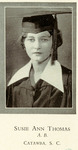
Interview with Susie Westbrook - OH 119
Susie Ann Thomas Westbrook
OH 119
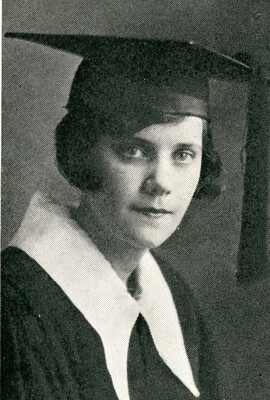
Mrs. Susie Ann Thomas Westbrook (1906-1994), a 1927 graduate of Winthrop College, talks about her student days at Winthrop, including the Winthrop Training School, teachers, uniforms, culture, entertainment and changes to the school.
-
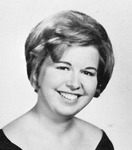
Interview with Jane West - OH 274
Martha Jane Cato West
OH 274
In her July 15, 2013 interview with Martha Manning, Jane Cato West (Class of 1968) details her time at Winthrop as a Biology major in the 1960s. Briefly, West discusses student life and Winthrop traditions, but she provides insight into her life student teaching at Florence High School. Additionally, West includes her experience in required courses like English and Math, as well as experiments conducted in her Biology courses. West concludes the interview with her overall perceptions of Winthrop.
-
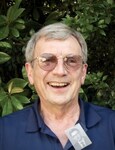
Interview with David A. White - OH 635
David Altman White
OH 635
This interview was conducted as part of the Winthrop History Project, an initiative led by Winthrop President Emeritus Dr. Anthony DiGiorgio and Rebecca Masters. The project aimed to document Winthrop’s transformation over Dr. DiGiorgio’s 24-year tenure, tracing the institution’s evolution from Winthrop College to Winthrop University. Designed to supplement Dr. Ross Webb’s The Torch is Passed, which chronicles Winthrop’s history up to Dr. DiGiorgio’s presidency, this project sought to provide a comprehensive account of this significant period.
A key component of the initiative was a series of recorded interviews with members of the extended Winthrop community who played a role in shaping the university’s progress. These firsthand narratives preserve the voices, experiences, and perspectives of those who contributed to Winthrop’s growth and development.
This interview features David Altman White (1935-2024), who served on the Winthrop University Board of Trustees from 1990 to 2002, including a term as Chair beginning in 1998. Prior to his tenure on the Board, Mr. White was a member of the Winthrop Foundation Board from approximately 1985 to 1990. An attorney who began practicing in the area during the 1960s, he worked alongside longtime Board of Trustees member John T. Roddey. In this discussion, Mr. White shares his experiences and insights from working with President Dr. Anthony DiGiorgio, reflecting on his contributions to Winthrop's growth and development.
-
Interview with Gina Price White - OH 172
Gina Price White
OH 172
This interview was conducted by Amber Kelley for her History 590 capstone course with Mrs. Gina Price White, Director of the Louise Pettus Archives and Special Collections at Winthrop University. Drawing on her extensive research and familiarity with institutional records, Mrs. White discusses the early history of Winthrop and its relocation from Columbia to Rock Hill in the 1890s.
Mrs. White explains that the move resulted from the school outgrowing its original facilities in Columbia and the transition to state support in 1891. She outlines the formal bidding process through which various towns and cities competed to host the institution, emphasizing that the process was largely fair and based on the quality of proposals submitted. According to her account, Rock Hill ultimately secured Winthrop by offering the most attractive package of financial and material incentives, including land, building materials, and local support.
The interview also addresses the roles of key figures such as Benjamin Tillman and David Bancroft Johnson. Mrs. White clarifies that while Tillman, as governor and a member of the Board of Trustees, held influence, the decision-making process involved a committee review of bids and final approval by the state legislature. She highlights Johnson’s leadership and the committee’s role in evaluating proposals, noting that the final decision was driven primarily by practical and economic considerations rather than any single individual’s preference.
Additionally, Mrs. White addresses common misconceptions about the move, including assumptions about political or social motivations, and emphasizes that institutional needs and local incentives were the primary determining factors. Overall, the interview provides insight into the administrative, political, and economic context surrounding Winthrop’s relocation and the collaborative process that shaped its establishment in Rock Hill.
-
Interview with Julia C. White - OH 508
Julia C. White
OH 508
IN PROCESSING
Interviews with extension members and agents throughout the country documenting the history and development of the extension movement in the U.S. The interviews describe homemaking, child bearing and family management in the small towns and rural areas where they live. They also discuss the role of extension homemakers groups in their lives.