


Interviewer
Rosanna Thomas
Files
Abstract
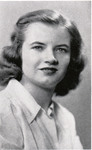
This interview with Dr. Mary Wylie “Polly” Ford was conducted by Rosanna Thomas on August 5, 2026, as part of the Louise Pettus Archives and Special Collections Oral History Program. Ford attended Winthrop Training School from kindergarten through eleventh grade, graduating in 1944. She then attended Winthrop College, where she earned a bachelor’s degree in Physical Education. After teaching at Anderson College, in Danville, Virginia, and in Illinois, and completing graduate study in Iowa, Ford returned to Winthrop in 1960 as a faculty member in the Physical Education Department. She remained at Winthrop until her retirement in 1992.
Ford discusses her childhood and educational experiences at Winthrop Training School, including the school’s physical layout, organization, curriculum, teachers, and daily routines. She describes the progression from elementary school, where students remained with the same classmates and teachers, to the seventh grade and beyond, when students began changing classrooms and teachers for different subjects. Ford recalls the role of Winthrop students who served as practice teachers, noting that their presence exposed Training School students to new teaching methods. She also discusses the school’s relationship to the Rock Hill community, including the perception that Training School students were somewhat separate from students attending local public schools. Ford emphasizes that the Training School was neither fully a public nor private school and recalls the sense of camaraderie that developed among its students.
Ford reflects on memorable teachers and subjects, including her enjoyment of mathematics and science and her dislike of music. She recalls how her mathematics teacher incorporated current events, including World War II, into classroom lessons. She also shares a humorous but formative memory of being singled out during a music class, which influenced her later approach to teaching physical education. Ford discusses how experiences such as being chosen last for athletic teams could affect students and describes the importance of avoiding practices that might negatively affect children’s confidence and self-esteem.
The interview also explores Ford’s transition from Winthrop Training School to Winthrop College. She discusses her decision to attend Winthrop, noting the school’s proximity to her home, the cost of attending, and her family’s longstanding connection to the institution. Ford’s mother and other relatives also attended Winthrop. She describes attending as a “town student,” living at home during her first three years of college before residing in a dormitory during her senior year. Ford discusses the experiences of town students, including the “town girls’ room” in Main Building and the Beta Sigma Delta (BSD) sorority, an organization for town students. She also recalls campus organizations, including a professional physical education organization and the YWCA.
Ford describes her academic experience as a Physical Education major, including courses in physical education, biology, anatomy, physiology, chemistry, and physics. She recalls Winthrop’s uniform requirements, the use of semesters, and the provision of textbooks. She reflects on several of her professors and emphasizes the value of demanding teachers who encouraged students to work hard and perform at a high level.
Ford discusses the limited career opportunities available to women when she was growing up and explains how teaching became a natural career choice. She describes her early teaching positions at Anderson College and in Danville, Virginia, her graduate studies in Iowa, and subsequent teaching work in Illinois before returning to Winthrop in 1960. She reflects positively on her Winthrop education and career, expressing pride in her degree and describing her longstanding connection to the institution.
Throughout the interview, Ford reflects on the changes she witnessed in education, women’s opportunities, and Winthrop over the course of her life. She discusses the transformation of Winthrop from a women’s college into a coeducational institution and comments on the lingering public perception of Winthrop as a women’s college. Ford concludes by expressing her strong affection for Winthrop and her belief that the institution has often been underestimated.
Publication Date
8-5-2026
Unique Identifier
OH 804
Format
MP3; WAV;
Length
00:55:28
Restrictions
Open under the rules and regulations of the Louise Pettus Archives and Special Collections at Winthrop University
Series
Alumni, Faculty and Staff
Recommended Citation
Ford, Mary Wylie, "Interview with Mary Wylie "Polly" Ford - OH 804" (2026). Winthrop University Oral History Program. OH 804.
https://digitalcommons.winthrop.edu/oralhistoryprogram/777