
-
Interview with Leonard Hewell "Kip" Carter - OH 312
Leonard Hewell Carter
In his February 10, 2012 interview with Robert Ryals, Leonard Hewell “Kip” Carter details growing up in the South during segregation and the Civil Rights Movement, as well as his life as political aide/campaign treasurer to Newt Gingrich. Included are details of his college education at UNC-Chapel Hill – classes, professor, and the Red Scare. Carter shares the history of his friendship and working relationship with Newt Gingrich, the scandals Gingrich faced, and the ultimate end of their relationship. This interview was conducted for inclusion into the Louise Pettus Archives and Special Collections Oral History Program.
-
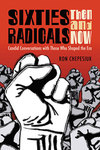
Interview with Jim Fouratt - OH 234
Jim Fouratt
In his February 28, 1993 interview with Ron Chepesiuk, Jim Fouratt discussed his involvement with the Gay Liberation Front and the anti-war movement. Fourrat is an actor and has been since before he was a gay rights activist. Fourrat explained his role as a leader in the Gay Liberation Front, a non-violent activist group. He also covered the topics of “outing”, hippies, the New Left, the Black Panther Party, J. Edgar Hoover, Stonewall, homophobia, blacklisting in Hollywood, self-empowerment, the AIDS epidemic, and non-violence versus violence. This interview was conducted for inclusion into the Louise Pettus Archives and Special Collections Oral History Program.
-

Interview with Harold T. Blackman - OH 203
Harold T. Blackman
In his interview with Michael Cooke, Harold T. Blackman (1915-1988) discusses his involvement with the Progressive Democratic Party. Mr. Blackman details the beginnings of the Progressive Democratic Party and the early work to bring more people from the black community into the political arena in South Carolina during the 1930s, 1940s, and 1950s. He also discusses the Palmetto Voters Association and their involvement and cooperation with the Progressive Democratic Party.
-
Interview with William M. Bowman Sr. - OH 252
William M. Bowman Sr.
In his interview with Michael Cooke, Rev. William M. Bowman Sr. (1914-2000) discusses his involvement in the Progressive Democratic Party and the Palmetto Voter’s Association. Mr. Bowman details the impact these organizations had on the black community in the efforts to increase participation in the political process. In the interview, he discusses how these organizations started and the work they did in an attempt to achieve full participation of the black community. In the 1960s, Rev. Bowman helped organize sit-ins at segregated lunch counters in downtown Columbia and worked to educate local African Americans how to use their right to vote.
-
Interview with Lucretia Cayruth - OH 253
Lucretia Cayruth
In her interview with Michael Cooke, Lucretia Cayruth discusses her experiences growing up in South Carolina and her involvement with the Progressive Democratic Party. Mrs. Cayruth details her education, and experiences that lead her to become involved with the Progressive Democratic Party as well as the efforts to enable the black community to register to vote in South Carolina. Mrs. Cayruth discusses her interactions with John McCray and her role in the Progressive Democratic Party in Columbia South Carolina.
-
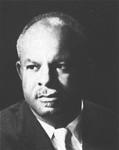
Interview with Arthur John Howard Clement Jr. - OH 249
Arthur John Howard Clement Jr.
In his interview with Michael Cooke, Arthur John Howard Clement Jr. (1908-1986) discusses his life and work in Charleston, South Carolina. Mr. Clement details his experiences growing up in the South and what lead him to become active in political issues. He relates his involvement with the South Carolina Progressive Democratic Party whose purpose was to provide African Americans a more active voice in state and national elections. He also discusses his role in and work with the NAACP. He even served as President of the Charleston Branch of the NAACP. In 1950, Clement opposed incumbent Rep. L. Mendel Rivers in South Carolina’s First Congressional District, becoming the first African American in South Carolina to run for Congress as a Democrat. Mr. Clement also discusses his experience with the Avery Institute and how that helped shape his political ideology.
*many online sources incorrectly state that Arthur J. H. Clement, Jr. died in 1985, however he passed away on September 23, 1986
-
Interview with James A. Hodge - OH 211
James A. Hodge
In his interview with Michael Cooke, James A Hodge discusses his life and experiences in rural South Carolina. He also details his time with and memories of the Progressive Democratic Party, integration, African American voter registration and various politicians from Mullins, South Carolina. Mr. Hodge discusses the influence he witnessed within the black community especially in regards to the voter registration efforts.
-
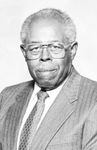
Interview with Jonas Thomas Kennedy - OH 265
Jonas Thomas Kennedy
In his interview with Michael Cooke, Jonas T. Kennedy discusses his experience with the Progressive Democratic Party in South Carolina. Mr. Kennedy details the process and difficulties black people would face in registering and voting during the 1940s and 1950s. Mr. Kennedy also discusses the difficulties and expectations involved with the attempted buying of votes for certain candidates.
Dr. Jonas Thomas Kennedy (1917-2014) was a farmer and philanthropist from Bennettsville, SC. His parents and his two sisters both graduated from Claflin College, a historically black university in Orangeburg, South Carolina. Dr. Kennedy attended Claflin College before transferring to South Carolina State College to study Agriculture from which he graduated. He managed his 1200 acre farm and was a very successful farmer, even being named the 1977 Framer of the Year. Dr. Kennedy maintained a strong relationship with Claflin College and served as a trustee from 1969 to 1983. He was awarded an honorary Doctor of Humanities degree in 1975 from Claflin and inducted into the University Hall of Fame in 1993. He also made major donations to Africa University in Zimbabwe which was sponsored by the South Carolina United Methodist Conference. The University has buildings named in his honor. He served his community in several capacities and was the president of the Marlboro County NAACP for eleven years from 1947 to 1958.
-
Interview with John Henry McCray - OH 212
John Henry McCray
John Henry McCray (1910-1987) was a journalist, newspaper publisher, politician, civil rights activist who was instrumental in forming the Progressive Democratic Party which was the African American party of choice throughout the South including many counties in South Carolina. In this interview, Mr. McCray discusses Jim Crow Laws, African American voter registration, Aa newspaper called the Black National Farmer's Paper which which he founded. This newspaper was an early voice for civil rights.
-
Interview with Reverend Thomas J. Moore - OH 210
Thomas J. Moore
In his interview with Michael Cooke, Reverend Thomas J. Moore (1922-1989) discusses his participation in the Progressive Democratic Party and their efforts during the Civil Rights Movement. Mr. Moore details his experiences growing up and living in Marion South Carolina. He discusses the impact the Progressive Democratic Party had on the area around Marion as well as the State of South Carolina in improving the lives of the black community. He also discusses the Warring Decision which did away with the Literacy Test in South Carolina, African American voter registration, and Jim Crow Laws.
-
Interview with Mary Agnes Morgan - OH 251
Mary Agnes Morgan
In her interview with Michael Cooke, Mary Agnes Morgan discusses growing up in South Carolina, her education, and her experience with the Progressive Democratic Party. Mrs. Morgan details the impact the Progressive Democratic Party had on the local black community of Mullins, South Carolina. She also discusses how private education was established in the South for African Americans, the rise of African American politics in the South and race equality.
-
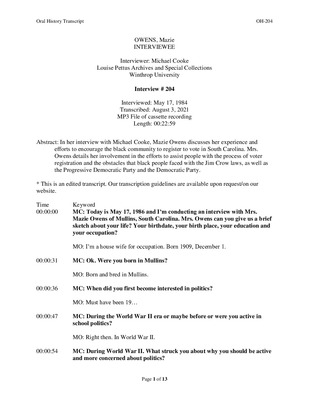
Interview with Mazie Owens - OH 204
Mazie Owens
In her interview with Michael Cooke, Mazie Owens discusses her experience and efforts to encourage the black community to register to vote in South Carolina. Mrs. Owens details her involvement in the efforts to assist people with the process of voter registration and the obstacles that black people faced with the Jim Crow laws, as well as the Progressive Democratic Party and the Democratic Party.
-
Interview with Fred D. Phillips - OH 209
Fred D. Phillips
IN PROCESSING
Fred Phillips gives an overview of his life experiences including his involvement with the Progressive Democratic Party and voter registration.
-
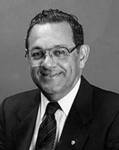
Interview with Wiley Austin Branton, Sr. - OH 359
Wiley Austin Branton Sr.
This interview was conducted for the South Carolina Legislative Black Caucus. Wiley Austin Branton, Sr. (1923-1988) first discusses his early life and experiences. Born in Arkansas, he was drafted into World War II before returning home and participating in his family’s taxi business. Mr. Branton wanted to attend the University of Arkansas but blacks were not allowed at the time so he pushed for the desegregation of the school. He graduated law school in 1952, and filed the original “Little Rock 9” lawsuit. He has an extensive record working with civil rights and the black community. From a young age he was interested in getting involved in the issue of voter registration in the black community. He worked with the NAACP to try and raise voting awareness in Arkansas during the late 1940s. He ended up getting convicted for the crime of using voting ballots for education instead of an official vote and this fueled his desire to go to law school. He goes into detail on his support of the black community and how he continued advocating for voter registration and civil rights.
-
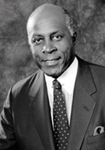
Interview with Vernon E. Jordan, Jr. - OH 360
Vernon Eulion Jordan Jr.
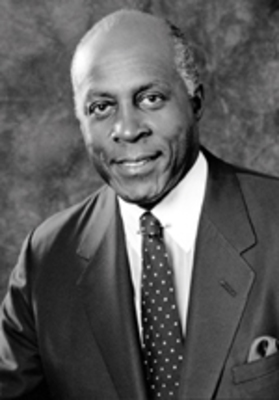
Interview conducted for the South Carolina Legislative Black Caucus with Vernon E. Jordan, Jr. (1935-2021) about his background and his involvement in organizations and projects like the Board of Education Project. Vernon Jordan is from Atlanta, Georgia and he was the second head of the Board of Education Project and wanted to improve African American education, voting rights, and political involvement. He also discusses the Board of Education Project’s objectives and how effective he believed it was.
-
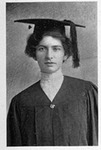
Interview with Elizabeth Ellis Taylor - OH 196
Elizabeth Ellis Taylor
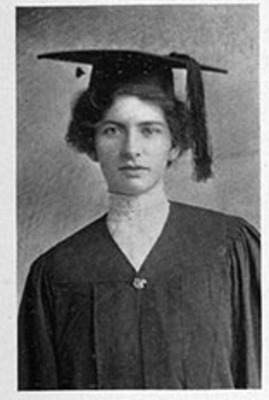
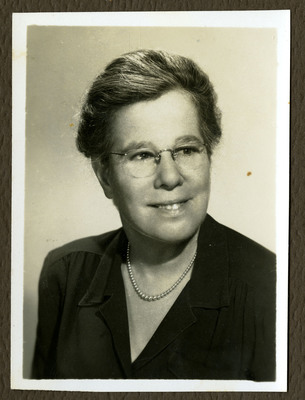
The subject of the interview is Mrs. Mary Gordon Ellis (1890-1934), the first female senator in the South Carolina General Assembly from Jasper County, 1928-1932, and county Superintendent of Education from 1924-1928. She was involved in controversial issues such as school consolidation, hiring of African American supervisors, buses for both races, equal textbooks, and required in-service training for teachers.
-

Interview with Dr. Roswell Nathaniel Beck - OH 368
Roswell Nathaniel Beck Sr. and South Carolina Legislative Black Caucus
This interview features Dr. Roswell “R. N.” Nathaniel Beck, Sr. (1913–2003) of Florence, South Carolina, a respected physician and U.S. Army Medical Corps veteran of the Korean War. Dr. Beck reflects on his lifelong commitment to advancing African American rights, with particular focus on his work with the South Carolina Voter Education Project and his efforts to guide and influence the priorities of the South Carolina Legislative Black Caucus.
-
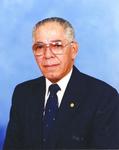
Interview with Herbert Fielding - OH 364
Herbert Ulysses Gaillard Fielding
Herbert Ulysses Gaillard Fielding (1923-2015) was a Charleston, SC native. He served in the United States Army during World War II and received a Bachelor of Science degree from West Virginia College in 1948. Mr. Fielding was very involved n the Civil Rights Movement and became the first African American to be elected to the South Carolina State Legislature since Reconstruction in 1970. He was later a South Carolina State Senator from 1985 until he retired in 1992. Mr. Fielding was also a member of the South Carolina Legislative Black Caucus serving as Chairman beginning in 1990.
-
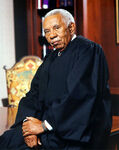
Interview with Hon. Ernest Adolphus Finney, Jr. - OH 365
Ernest Adolphus Finney Jr.
Honorable Ernest Adolphus Finney, Jr. (1931-2017) represented the “Friendship Nine,” which was a group of Friendship College students attested during a sit-in protest at the McCrory’s lunch counter in Rock Hill, South Carolina. Hon. Finney later became the first African American appointed to the South Carolina Supreme Court since Reconstruction and served from 1985 through 2000 and served as Chief Justice of South Carolina from 1994-2000.
This interview was conducted for the South Carolina Legislative Black Caucus. In this interview, Justice Finney describes his early life, education, and his law practice. He was a teacher in Conway during the 1950s due to racial discrimination making it hard for a black lawyer to get work. He describes how he and his family got involved with politics and worked with members of the Sumter county community to increase the amount of people registered to vote. He discusses the civil rights movement, the Voting Rights Act of 1965, and the state of the black community during this time. He talks about his experiences during the special sessions of 1973, during which South Carolina tried to reapportion its numbers in the House of Representatives. He discusses his involvement in the development of a black caucus for South Carolina and the impact it had on the state.
-
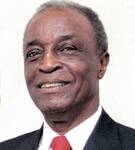
Interview with Earl Matthew Middleton - OH 361
Earl Matthew Middleton
Interview conducted for the South Carolina Legislative Black Caucus, interviewing Representative Earl Middleton. Orangeburg, South Carolina native Earl Matthew Middleton (1919-2007) became a member of the South Carolina House of Representatives in 1974, and served through 1984. In this interview, Representative Middleton discusses his background in the United States Air Force at the Tuskegee Institute as a pilot in the 99th pursuit squadron and his background in business and stock exchange before becoming involved in politics. Then, he discussed his background in politics before he was elected to the House of Representatives in 1974, including a failed run for the House of Representatives in 1972 and speaking at Martin Luther King rallies. Finally, Representative Middleton discusses his involvement in the Black Caucus and there goals, including changing how African Americans were viewed.
-
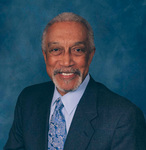
Interview with Theo W. Mitchell - OH 362
Theo Walker Mitchell
This recording is an interview conducted by Michael A. Cooke for the South Carolina Legislative Black Caucus with South Carolina Representative Theo Walker Mitchell (b. 1938), discussing his background, political interest, and involvement in both the South Carolina House of Representatives and the Black Caucus. Theo Mitchell is from Greenville, South Carolina and he joined the South Carolina House of Representatives from the 23rd district from 1975-1985 and then served as a member of the South Carolina Senate from the 7th district from 1985-1995. The Black Caucus started the same year Mr. Mitchell began serving in the South Carolina State House of Representatives in 1975. This interview discusses Mitchell’s campaign and experiences in the SC House of Representatives as well as the accomplishments and goals of the Black Caucus.
-
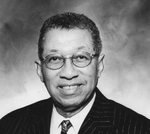
Interview with Kay Patterson - OH 366
Kay Patterson
This interview was conducted by Michael A. Cooke with South Carolina Representative, Kay Patterson who was a member of the South Carolina Legislative Black Caucus. Kay Patterson was born in Darlington, South Carolina in 1931 and grew up in Sumter, South Carolina. Before entering politics, he was a teacher and advocate in his community for African American education and voting rights, including advocating for the voting rights act of 1965. In 1975, Kay Patterson became a member of the House of Representatives and served in the House for the 73rd district until 1985. In 1985, he became a member of the South Carolina Senate from the 19th district until he retired in 2008. He also served as the Secretary of the Black Caucus. In this interview, Kay Patterson discusses his background and his political career, including his personal goals and the goals of the Black Caucus.
Printing is not supported at the primary Gallery Thumbnail page. Please first navigate to a specific Image before printing.