






-
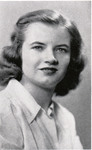
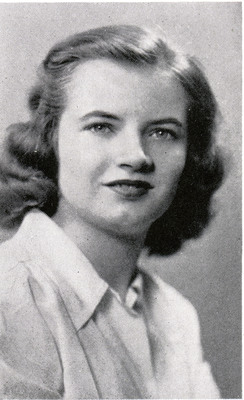
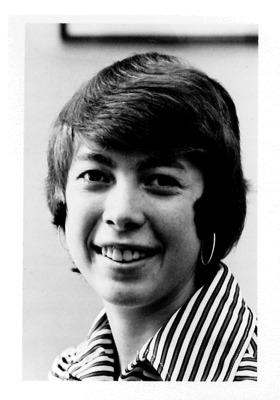
Interview with Mary Wylie "Polly" Ford - OH 804
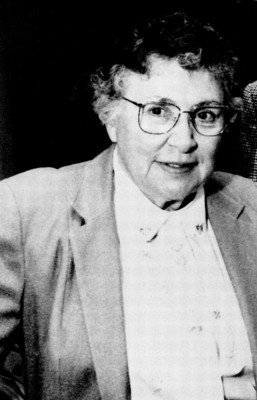
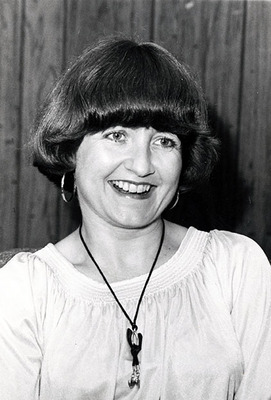
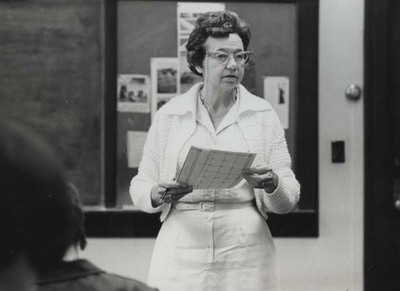
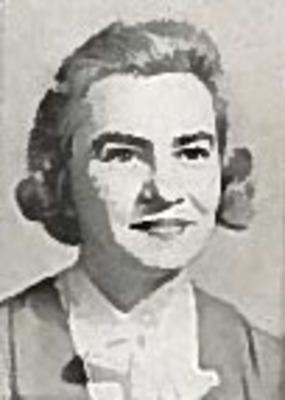
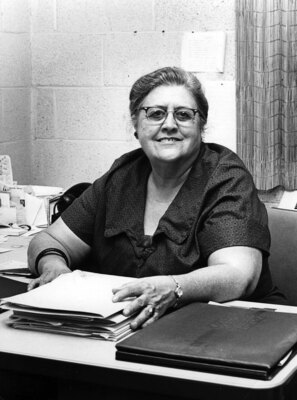
Mary Wylie Ford
This interview with Dr. Mary Wylie “Polly” Ford was conducted by Rosanna Thomas on August 5, 2026, as part of the Louise Pettus Archives and Special Collections Oral History Program. Ford attended Winthrop Training School from kindergarten through eleventh grade, graduating in 1944. She then attended Winthrop College, where she earned a bachelor’s degree in Physical Education. After teaching at Anderson College, in Danville, Virginia, and in Illinois, and completing graduate study in Iowa, Ford returned to Winthrop in 1960 as a faculty member in the Physical Education Department. She remained at Winthrop until her retirement in 1992.
Ford discusses her childhood and educational experiences at Winthrop Training School, including the school’s physical layout, organization, curriculum, teachers, and daily routines. She describes the progression from elementary school, where students remained with the same classmates and teachers, to the seventh grade and beyond, when students began changing classrooms and teachers for different subjects. Ford recalls the role of Winthrop students who served as practice teachers, noting that their presence exposed Training School students to new teaching methods. She also discusses the school’s relationship to the Rock Hill community, including the perception that Training School students were somewhat separate from students attending local public schools. Ford emphasizes that the Training School was neither fully a public nor private school and recalls the sense of camaraderie that developed among its students.
Ford reflects on memorable teachers and subjects, including her enjoyment of mathematics and science and her dislike of music. She recalls how her mathematics teacher incorporated current events, including World War II, into classroom lessons. She also shares a humorous but formative memory of being singled out during a music class, which influenced her later approach to teaching physical education. Ford discusses how experiences such as being chosen last for athletic teams could affect students and describes the importance of avoiding practices that might negatively affect children’s confidence and self-esteem.
The interview also explores Ford’s transition from Winthrop Training School to Winthrop College. She discusses her decision to attend Winthrop, noting the school’s proximity to her home, the cost of attending, and her family’s longstanding connection to the institution. Ford’s mother and other relatives also attended Winthrop. She describes attending as a “town student,” living at home during her first three years of college before residing in a dormitory during her senior year. Ford discusses the experiences of town students, including the “town girls’ room” in Main Building and the Beta Sigma Delta (BSD) sorority, an organization for town students. She also recalls campus organizations, including a professional physical education organization and the YWCA.
Ford describes her academic experience as a Physical Education major, including courses in physical education, biology, anatomy, physiology, chemistry, and physics. She recalls Winthrop’s uniform requirements, the use of semesters, and the provision of textbooks. She reflects on several of her professors and emphasizes the value of demanding teachers who encouraged students to work hard and perform at a high level.
Ford discusses the limited career opportunities available to women when she was growing up and explains how teaching became a natural career choice. She describes her early teaching positions at Anderson College and in Danville, Virginia, her graduate studies in Iowa, and subsequent teaching work in Illinois before returning to Winthrop in 1960. She reflects positively on her Winthrop education and career, expressing pride in her degree and describing her longstanding connection to the institution.
Throughout the interview, Ford reflects on the changes she witnessed in education, women’s opportunities, and Winthrop over the course of her life. She discusses the transformation of Winthrop from a women’s college into a coeducational institution and comments on the lingering public perception of Winthrop as a women’s college. Ford concludes by expressing her strong affection for Winthrop and her belief that the institution has often been underestimated.
-
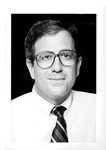
Interview with Frank Ardaiolo - OH 176
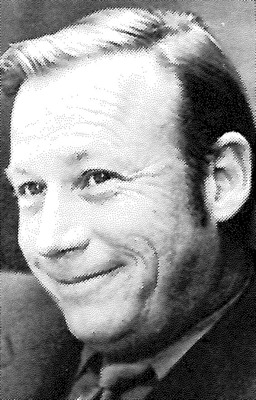
Frank Ardaiolo
In his March 9, 2015 interview with Daniel Lee, Frank Ardaiolo shares his experience with and response to Hurricane Hugo. Ardaiolo recounts the destruction on Winthrop campus and how Hurricane Hugo helped establish new emergency response standards. This interview was conducted for inclusion into the Louise Pettus Archives and Special Collections Oral History Program.
-
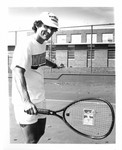
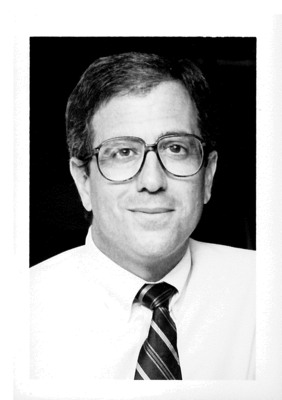
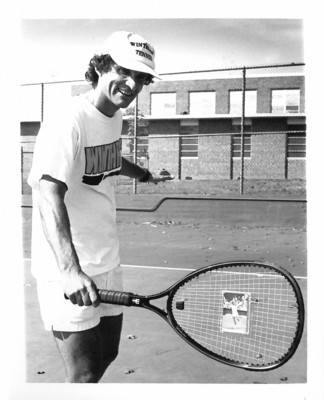
Interview with Cid Carvalho - OH 177
Alcides Carvalho
In his March 23, 2015 interview with Jenna Kasmarik, Cid Carvalho shares the story of his coming to Winthrop as a student and his career as head tennis coach. Carvalho details the evolution of the sport at Winthrop from facilities to the decision to break up coaching by men’s and women’s teams. Finally, Carvalho shares his opinion on Title IX and its change in sports at Winthrop. This interview was conducted for inclusion into the Louise Pettus Archives and Special Collections Oral History Program.
-
Interview with Mark Cooke - OH 219
Marvin Mark Cooke
In his March 25, 2015 interview with Jenna Kasmarik, Mark Cooke (1953-2023) details the role Title IX has played in athletics at Winthrop. Cooke details changes in recruitment and facilities. He also shares why he’s stayed at Winthrop for so many years. This interview was conducted for inclusion into the Louise Pettus Archives and Special Collections Oral History Program.
-

Interview with Bob Gorman - OH 169
Robert M. Gorman
In his August 20, 2015 interview with Michelle Dubert-Bellrichard, Bob Gorman describes his career at Winthrop from 1986-2014, and his involvement in the Vote of No Confidence in 1995. Gorman compares the Winthrop of 1986 to the Winthrop of today and recounts the history of Presidents from 1986 to the present. This interview was conducted for inclusion into the Louise Pettus Archives and Special Collections Oral History Program.
-

Interview with Walter Hardin - OH 311
Walter Anderson Hardin
In an August 27, 2015, interview with Michelle Dubert-Bellrichard for the Louise Pettus Archives and Special Collections Oral History Program, Walter Hardin reflects on his unique upbringing on the Winthrop University campus and his extensive career at the institution beginning in 1987. Hardin offers personal insights into the university's evolution, campus life, and his professional journey within the Winthrop community.
-

Interview with Walter Hardin - OH 787
Walter Anderson Hardin
In this November 13, 2015, interview conducted by Michelle Dubert-Bellrichard, Walter Hardin delves into the rich history of Winthrop University's campus architecture. As a follow-up to their earlier discussion on August 27, 2015, Hardin offers an in-depth exploration of the Little Chapel and its surrounding grounds, as well as the iconic Tillman Hall, originally known as the Main Building. He provides insights into the architectural significance and historical evolution of these structures. Additionally, Hardin addresses the contentious issue surrounding the naming of Tillman Hall after Benjamin Tillman (1847-1918), a figure whose legacy has sparked debate within the university community. This conversation sheds light on the complexities of preserving history while acknowledging evolving societal values
-
Interview with Thomas Nelson Hickman - OH 171
Thomas Nelson Hickman
In his February 27, 2015 interview with Jenna Kasmarik, Thomas Hickman shares his experiences complying with Title IX in the athletic department. Hickman lends his perspective on the pros and cons of Title IX and how the athletic department has changed since Title IX became law. This interview was conducted for inclusion into the Louise Pettus Archives and Special Collections Oral History Program.
-
Interview with Ben Paxton - OH 215
Ben Paxton
This interview was conducted by Jenna Kasmarik with Ben Paxton, Head Cross-Country and Track and Field Coach at Winthrop University, on March 25, 2015, for Kasmarik’s capstone project on Title IX at Winthrop University. Paxton discusses his arrival at Winthrop in 1993 and his experiences developing the university’s track and field program. At the time, Winthrop had an established cross-country program but no track facility, and Paxton describes the challenges of recruiting athletes, training on grass fields, borrowing equipment from other departments, and building the program from a small group of existing athletes. He discusses recruiting athletes from South Carolina and surrounding states, the support he received from other Winthrop athletic programs, and the early success of the men’s and women’s cross-country and track and field teams.
Paxton reflects on his 22 years at Winthrop and discusses his reasons for remaining at the university. He describes Winthrop’s emphasis on academics and the balance between academic and athletic priorities. The interview also focuses on Title IX and its effects on collegiate athletics. Paxton discusses the expansion of athletic opportunities for women and compares his experiences as a college athlete during the transition from the Association for Intercollegiate Athletics for Women (AIAW) to the National Collegiate Athletic Association (NCAA). He discusses the addition of women’s soccer and lacrosse at Winthrop and his belief that Title IX contributed to the expansion of women’s athletics and the composition of Winthrop’s athletic programs.
Paxton also discusses aspects of Title IX that he would change, including the distribution of track and field scholarships between men’s and women’s programs. He describes the development of combined men’s and women’s track and field programs and reflects on the advantages and disadvantages of having a single head coach for both programs. He discusses the opportunities Title IX has provided to women athletes and contrasts those opportunities with the experiences of women athletes before the expansion of collegiate women’s athletics. The interview concludes with Paxton’s reflections on the effects of Title IX on college sports and the financial and administrative considerations involved in adding or maintaining athletic programs.
-
Interview with Rich Posipanko - OH 186
Rich Posipanko
In his March 23, 2015 interview with Jenna Kasmarik, Rich Posipanko talks about how Winthrop built up its athletic department and the challenges it’s faced in the subsequent years. Specifically, Posipanko shares his opinions on how Title IX has affected athletics at Winthrop. Posipanko concludes his interview reminiscing of the changes he’s seen in the athletic department. This interview was conducted for inclusion into the Louise Pettus Archives and Special Collections Oral History Program.
-
Interview with Jason H. Silverman - OH 291
Jason H. Silverman
In his July 30, 2015 interview with Michelle Dubert-Bellrichard, Jason Silverman details his career at Winthrop since 1984. Silverman recalls the administrations of President Lader, Piper, DiGiorgio, and Comstock. In particular, Silverman recounts the events leading up to the vote of no confidence in 1995, his involvement as chair of faculty conference, and what happened on campus after the motion failed to pass. This interview was conducted for inclusion into the Louise Pettus Archives and Special Collections Oral History Program.
-

Interview with Gina Price White - OH 172
Gina Price White
This interview was conducted by Amber Kelley for her History 590 capstone course with Mrs. Gina Price White, Director of the Louise Pettus Archives and Special Collections at Winthrop University. Drawing on her extensive research and familiarity with institutional records, Mrs. White discusses the early history of Winthrop and its relocation from Columbia to Rock Hill in the 1890s.
Mrs. White explains that the move resulted from the school outgrowing its original facilities in Columbia and the transition to state support in 1891. She outlines the formal bidding process through which various towns and cities competed to host the institution, emphasizing that the process was largely fair and based on the quality of proposals submitted. According to her account, Rock Hill ultimately secured Winthrop by offering the most attractive package of financial and material incentives, including land, building materials, and local support.
The interview also addresses the roles of key figures such as Benjamin Tillman and David Bancroft Johnson. Mrs. White clarifies that while Tillman, as governor and a member of the Board of Trustees, held influence, the decision-making process involved a committee review of bids and final approval by the state legislature. She highlights Johnson’s leadership and the committee’s role in evaluating proposals, noting that the final decision was driven primarily by practical and economic considerations rather than any single individual’s preference.
Additionally, Mrs. White addresses common misconceptions about the move, including assumptions about political or social motivations, and emphasizes that institutional needs and local incentives were the primary determining factors. Overall, the interview provides insight into the administrative, political, and economic context surrounding Winthrop’s relocation and the collaborative process that shaped its establishment in Rock Hill.
-
Interview with Gale Teaster - OH 068
Gale Teaster
In her October 2014 interview with Rebecca Nave, Gale Teaster detailed her thoughts and memories of her time at Winthrop University (then Winthrop College). Teaster spoke of the time period of 1971-1975 on the following topics: Coeducation, Winthrop traditions, student life, and outside opinions on the coeducation of Winthrop College. Teaster also offered her opinions on how Winthrop has changed between the 1970s and today. Teaster then discussed the change in diversity at Winthrop as a result of coeducation. This interview was conducted for inclusion into the Louise Pettus Archives and Special Collections Oral History Program.
-
Interview with Margaret Williamson - OH 065
Margaret Williamson
In her October 2, 2014 interview with Rebecca Nave, Margaret Williamson speaks of her time at Winthrop University during its transition into a coed institution. She talks of her involvement in various student organizations and athletics. She also talks of the changes in Winthrop, diversity wise, from when she was a student in 1974 to an employee at Winthrop today. This interview was conducted for inclusion into the Louise Pettus Archives and Special Collections Oral History Program.
-

Interview with Blair Whitney Ligon - OH 272
Blair Whitney Ligon
In her May 29, 2013 interview with Martha Manning, Blair Ligon, a third generation Winthrop alumna, shares her experience as an Integrated Marketing Communications major from 2007-2011. Ligon recalls the professors that made a lasting impression and shares some of her favorite classes. Ligon also expresses her pride in being a Winthrop alumna and current alumni relations employee. This interview was conducted for inclusion into the Louise Pettus Archives and Special Collections Oral History Program.
-
Interview with Jane Rawls - OH 301
Jane Rawls
In her August 1, 2013 interview, Jane Rawls shares stories of her life as a student at Winthrop Training School in the 1960s and as “day student” in 1974. In particular, Rawls discusses life as a child and student in the 1960s. Rawls shares her perspective of the counterculture in the 1960s and 1970s and how Winthrop and the community were affected. This interview was conducted for inclusion into the Louise Pettus Archives and Special Collections Oral History Program.
-

Interview with Shannon Simpson - OH 273
Shannon Simpson
In her June 12, 2013 interview with Martha Manning, Shannon Simpson detailed her time as an undergraduate student at Winthrop from 1995-1999. Discussed are details of Simpson’s life as a student – residence halls, classes, meals – rules and regulations on campus, and her desire to go back to Winthrop as a graduate student in 2013. Included are Simpson’s thoughts on professors, traditions, and cultural events on campus. Simpson also shares details of her career as a police officer after attending Winthrop to a transition as an employee in Human Resources. This interview was conducted for inclusion into the Louise Pettus Archives and Special Collections Oral History Program.
-
Interview with Mark Y. Herring - OH 257
Mark Y. Herring
In this episode of WFAE 90.7 FM’s Charlotte Talks, host Mike Collins interviews Dr. Mark Y. Herring, Dean of Library Services at Winthrop University, and Bill Nelson, Director of Libraries at Augusta State University, about the changing role of academic libraries amid the growing use of the internet in higher education. The discussion examines the challenges of evaluating the authority and accuracy of information found online, including students’ tendency to prioritize the speed and convenience of accessing information over thorough research and verification. Herring and Nelson discuss the increasing incidence of plagiarism, the importance of corroborating sources, and the value of subscription databases that provide access to scholarly and verified materials. They also address the limited amount of library material available online, the costs and challenges of digitization and electronic resource subscriptions, the preservation and accessibility of digital materials, and the continuing importance of print collections. Herring emphasizes the role of libraries and librarians in teaching students research skills and traditional scholarly practices, while both guests consider how print resources and emerging technologies can be integrated to support academic research. The conversation ultimately explores how academic libraries can adapt to technological change while maintaining their roles as centers for scholarship, research, and access to reliable information.
-
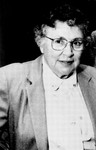
Interview with Louise Pettus - OH 258
Mildred Louise Pettus
Louise Pettus shares her memories and thoughts about her years at Winthrop College (1942-1946). She discusses her switching her major from business to history, the kinds of productions and programs that occurred at Winthrop, and how buildings have changed since she was a student. She talks at length about the buildings and their uses, from Main Building becoming Tillman Hall to Carnegie Library becoming Rutledge. She also discusses the stricter student policies that took place while she was enrolled, like campusing students or shipping them home. If a student was campused as a punishment, they could not leave campus grounds for sometimes up to two weeks. She discusses the types of general education courses she took as well as some of the specialized classes for her history major. Some interesting classes she took include archery and spring hockey. She discusses the military men housed in Bancroft Hall during her time at Winthrop.
-
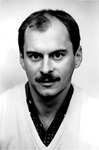
Interview with Keith Louis Bildstein - OH 180
Keith Louis Bildstein
The interview was conducted in preparation for an article to be written by Ron Chepesuik. Dr. Bildstein discusses his personal and educational background, his interest in birds and biology and his career at Winthrop. Dr. Bildstein received his BS in biology from Muhlenberg College in 1972 and then his Doctorate from Ohio State University. He came to work at Winthrop University in the fall of 1978. He discusses his interest in birds, originating from his father’s pastime of pigeon racing, and his study of birds, why he prefers studying birds over mammals, and the development of the study of birds. He also talks about his professional career, teaching at Winthrop University and awards he has received as a researcher and professor. Dr. Bildstein left Winthrop in 1992 and later became Director of Hawk Mountain Sanctuary and Director of Conservation Science at Hawk Mountain Sanctuary in Pennsylvania.
-
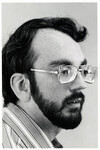
Interview with Edward W. Clark - OH 159
Edward William Clark
This interview was conducted with Dr. Edward William Clark (1943- ), professor of English at Winthrop College, about his hobby of gravestone rubbing.
-
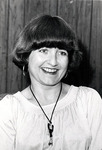
Interview with Susan Gayle Ludvigson - OH 165
Susan Ludvigson
IN PROCESSING
South Carolina poet and Winthrop professor of English, Ludvigson discusses biographical information, her writing career and the Guggenheim Fellowship Award.
-

Interview with Carole McIver and Laurance Mitlin - OH 173
Carole R. McIver and Laurance Mitlin
IN PROCESSING
This interview was conducted in preparation for an article for the Wilson Library Bulletin entitled “SOLINET: Impact on a Member Library.” The discussion centers on changes in public and technical services that were brought on by the computer system SOLINET and CLSI.
-
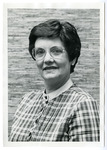
Interview with Martha F. Pursley - OH 266
Martha Faulconer Pursley
IN PROCESSING
Martha F. Pursley discusses her relationship with the presidents of Winthrop that she worked with and gives a brief sketch of each one.
-
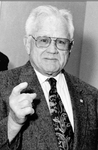
Interview with William Leonard Culp - OH 133
William Leonard Culp
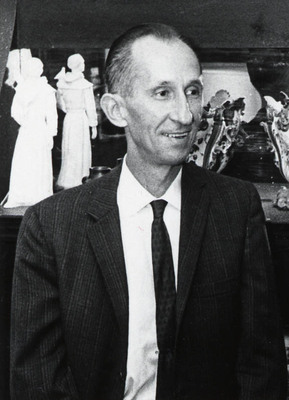
This interview was conducted with William Leonard Culp on May 5, 1981. Mr. Culp was Director of the Physical Plant (Facilities Management) at Winthrop College. Mr. Culp discusses Winthrop’s buildings and equipment, including the water tank, Tillman Hall, and its basement, clocks, and post office.
William Leonard “Bill” Culp (1920-2007) was born in 1920 on Winthrop’s campus in the house that once stood behind the Little Chapel and was the son of Leonard Parks Culp (1887-1978) who served as the director of Winthrop’s Physical Plant (later called Facilities Management) for 39 years. Bill Culp attended Macfeat and Winthrop Training School later succeeding his father. Bill Culp began working at Winthrop in 1951 continued through 2001 in the Physical Plant Department. He was well known as “a walking encyclopedia of Winthrop lore” and a gifted story teller. During his Winthrop tenure he received the first ever Winthrop Employee of the Month Award in 1984, a Presidential Citation in 1995, and Winthrop’s Chiller Plant was named in his honor in 1997.
Printing is not supported at the primary Gallery Thumbnail page. Please first navigate to a specific Image before printing.