




-
Interview with David Harmon - OH 523
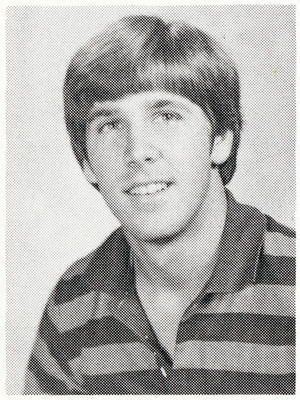
James David Harmon
This interview was conducted by Ty Young with David Harmon for Young’s paper on coeducation at Winthrop University. Harmon attended Winthrop from 1975 to 1977, shortly after the university began its transition to coeducation. A lifelong resident of York County, Harmon had previously attended Clemson University before returning to the Rock Hill area to attend Winthrop. He discusses his decision to attend Winthrop, including the opportunity to receive a four-year education while living at home and avoiding the cost of room and board. He also describes his experiences as a day student and as one of a small number of male students on campus.
Harmon discusses his experiences as a biology major, noting that there were only a few male students in the biology program and that he was sometimes the only man in a classroom. He describes the initial adjustment to attending classes at a formerly all-female institution and contrasts Winthrop’s student population and campus atmosphere with his previous experiences at Clemson University. Harmon recalls that the small number of male students made them noticeable on campus but explains that once classes began, the gender composition of the classroom did not interfere with his focus on his education. He also discusses the friendships he developed at Winthrop and the role of Dinkins Student Center as a gathering place for male and day students.
The interview addresses Harmon’s perceptions of the quality of education he received at Winthrop and his subsequent career in environmental and utilities work. He reflects positively on his education and describes graduating from Winthrop in 1977 before beginning a career in environmental services and water and wastewater utilities. Harmon also discusses the limited athletic opportunities available to male students during his time at Winthrop and recalls following the development of Winthrop athletics after the transition to coeducation.
Harmon discusses his views on the reasons Winthrop transitioned from an all-female institution to coeducation. He identifies declining enrollment and the need to increase enrollment as important factors, while also describing the university’s desire to expand its educational opportunities and better serve the surrounding community. He reflects on the broader cultural changes taking place at the time and the opportunity for men and women to receive an education together. Harmon also discusses the effects of coeducation on Winthrop and Rock Hill, particularly the increased opportunity for local students to attend a four-year institution while living at home. He concludes by reflecting on Winthrop’s growth and changing role as a broad-based educational institution serving both men and women.
-
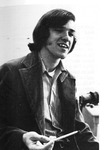
Interview with Dennis Stamper - OH 127
Dennis Stamper
In his January 12, 2015 interview with Michelle Dubert-Bellrichard, Dennis Stamper shares his memories of being one of the first male, day students from 1969-1972. Stamper details his studies and professors from the Philosophy and Religion Department, as well as the Psychology Department. Stamper includes his perception of the atmosphere at Winthrop during a time of great change in the country, and how that experience coupled with his work in the Wesley Foundation and the influence he received from professors paved the way for he currently lives his life. Stamper concludes his interview detailing his studies and careers after Winthrop. This interview was conducted for inclusion into the Louise Pettus Archives and Special Collections Oral History Program.
-
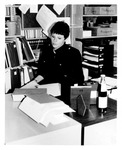
Interview with Gale Teaster - OH 068
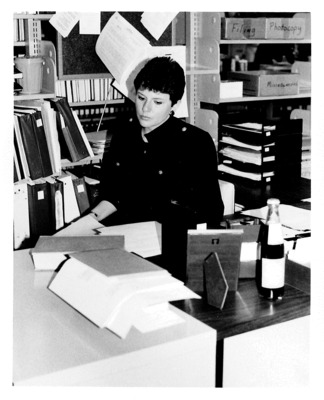
Gale Teaster
In her October 2014 interview with Rebecca Nave, Gale Teaster detailed her thoughts and memories of her time at Winthrop University (then Winthrop College). Teaster spoke of the time period of 1971-1975 on the following topics: Coeducation, Winthrop traditions, student life, and outside opinions on the coeducation of Winthrop College. Teaster also offered her opinions on how Winthrop has changed between the 1970s and today. Teaster then discussed the change in diversity at Winthrop as a result of coeducation. This interview was conducted for inclusion into the Louise Pettus Archives and Special Collections Oral History Program.
-
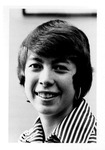
Interview with Margaret Williamson - OH 065
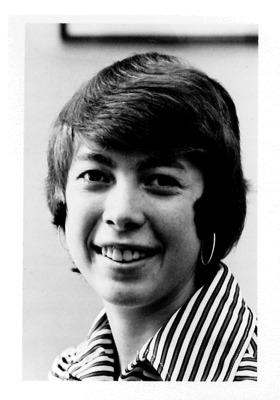
Margaret Williamson
In her October 2, 2014 interview with Rebecca Nave, Margaret Williamson speaks of her time at Winthrop University during its transition into a coed institution. She talks of her involvement in various student organizations and athletics. She also talks of the changes in Winthrop, diversity wise, from when she was a student in 1974 to an employee at Winthrop today. This interview was conducted for inclusion into the Louise Pettus Archives and Special Collections Oral History Program.
-
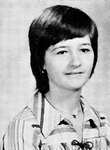
Interview with Joyce Lineberger - OH 270
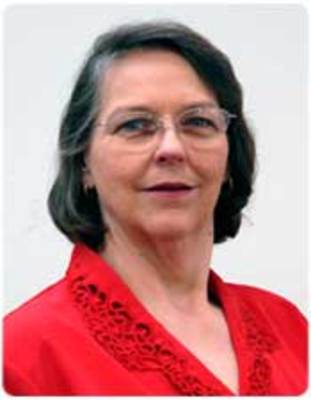
Joyce Lineberger
In her May 21, 2013 interview with Martha Manning, Joyce Lineberger details her life as a Winthrop undergraduate student from 1975-1977. Lineberger shares her experience with campus life: parking, dining, uniforms, and traditions. Lineberger also includes information on supportive teachers from her program but also an incident when she was accused of plagiarism. This interview was conducted for inclusion into the Louise Pettus Archives and Special Collections Oral History Program.
-
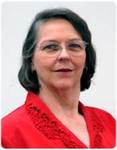
Interview with Jane Rawls - OH 301
Jane Rawls
In her August 1, 2013 interview, Jane Rawls shares stories of her life as a student at Winthrop Training School in the 1960s and as “day student” in 1974. In particular, Rawls discusses life as a child and student in the 1960s. Rawls shares her perspective of the counterculture in the 1960s and 1970s and how Winthrop and the community were affected. This interview was conducted for inclusion into the Louise Pettus Archives and Special Collections Oral History Program.
-
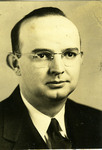
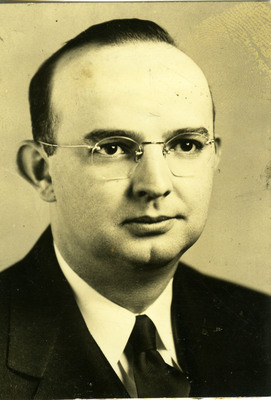
Interview with Harold Brite Gilbreth - OH 148
Harold Brite Gilbreth
Dr. Harold Brite Gilbreth (1908-1988) worked at Winthrop College from 1935-1974 as a professor of Business, Chairman of the Department of Business and Economics, and as the Director of Graduate Studies. In this interview Dr. Gilbreth discusses Winthrop College's move to Coeducation which became reality in 1974. He also discusses the Philosophy of Business and Vocational Education.
-
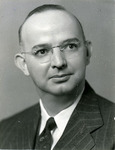
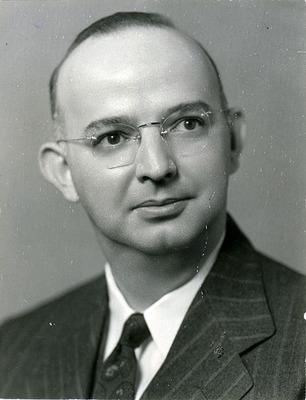
Interview with Harold Brite Gilbreth - OH 621
Harold Brite Gilbreth
This interview was conducted by Jane Odom with Dr. Harold Brite Gilbreth as part of Odom’s research for her thesis on coeducation at Winthrop University. Dr. Harold Brite Gilbreth (1908–1988) worked at Winthrop College from 1935 to 1974 as a professor of Business, chairman of the Department of Business and Economics, and director of Graduate Studies. Gilbreth discusses his involvement in efforts to transition Winthrop from an all-women’s college to a coeducational institution, beginning with early discussions and a faculty-trustee committee formed in the 1940s to study the possibility of coeducation. He describes arguments for and against admitting male students, including concerns about women’s safety, athletics, leadership opportunities, institutional identity, declining enrollment, and Winthrop’s financial future. He also discusses the relationship between coeducation and racial integration, noting that opposition to admitting male students was sometimes connected to fears about the admission of Black men.
Gilbreth recounts the influence of South Carolina Senator Marion Gressette and his opposition to coeducation and integration, including his recollection of the dissolution of the early faculty-trustee committee following a meeting with Gressette. He describes his own participation in a South Carolina Senate hearing on coeducation, where he spoke in favor of admitting male students and faced questioning from Gressette. Gilbreth also discusses the roles and opinions of Winthrop faculty, alumni, trustees, students, and legislators, noting that opposition among alumni was particularly vocal despite the absence of a formal poll. He explains the legal circumstances that required legislative action to change Winthrop’s status as the state college for women and discusses the gradual implementation of coeducation, including the admission of men to graduate, summer, and other special programs. Gilbreth also comments on Walter Schrader, the first male to receive a degree from Winthrop, and Cynthia Roddey, the first Black woman admitted to Winthrop College. The interview provides firsthand insight into the institutional, economic, legal, social, and racial issues surrounding Winthrop’s transition to coeducation.
-
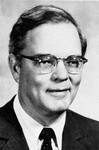
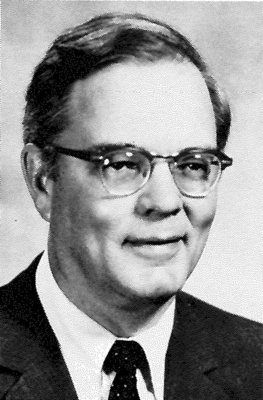
Interview with Frank Bryan Tutwiler - OH 26
Frank Bryan Tutwiler
This interview is with Dr. Frank Bryan Tutwiler who was born in Virginia on October 6, 1924 and he passed away in York, South Carolina on April 20, 1979. Dr. Tutwiler was a faculty member in the Chemistry Department at Winthrop College from 1955-1979. In this interview, Dr. Tutwiler discusses how different sciences are viewed, the relation between science and religion, how sciences are used in the world, both good and bad and those in between, and what the different sciences are, including physics, chemistry, biology, astronomy, and geology. He also talks about what science degree programs were offered at Winthrop while he taught there and how he attempted to create an astronomy program as well. Dr. Tutwiler also talks about stereotypes surrounding scientists and how these have affected which sciences are more popular and with whom they are more popular. He also discusses how the teaching of the sciences has changed and developed alongside the development of the sciences themselves.
*From 0:30:42 to 0:31:27 and again at 0:52:24 to 0:53:21, there is the start of a discussion about coeducation at Winthrop, but then it switches back to Dr. Tutwiler.
Printing is not supported at the primary Gallery Thumbnail page. Please first navigate to a specific Image before printing.